

Overview
Get to Know Josie and Kilgore!
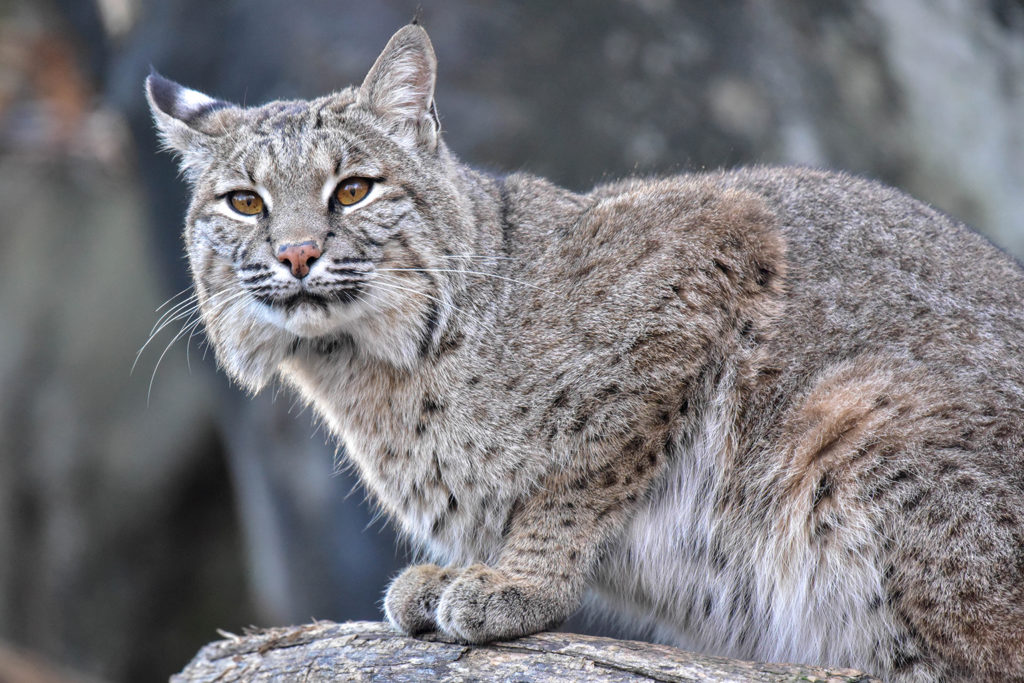
Bobcats like Josie and Kilgore get their name from the “bobbed,” stubby look of their tail. They are both typical adult sizes, and guests are often surprised when they see how big (or small) they are. People often expect bobcats to be significantly larger. This misconception often leads to tricky situations: when people spot bobcats, they may mistake them for a large domestic cat. Make no mistake: bobcats are not tame animals. It is best to keep a respectful and safe distance from them whenever you’re lucky enough to spot one!
Who’s Who
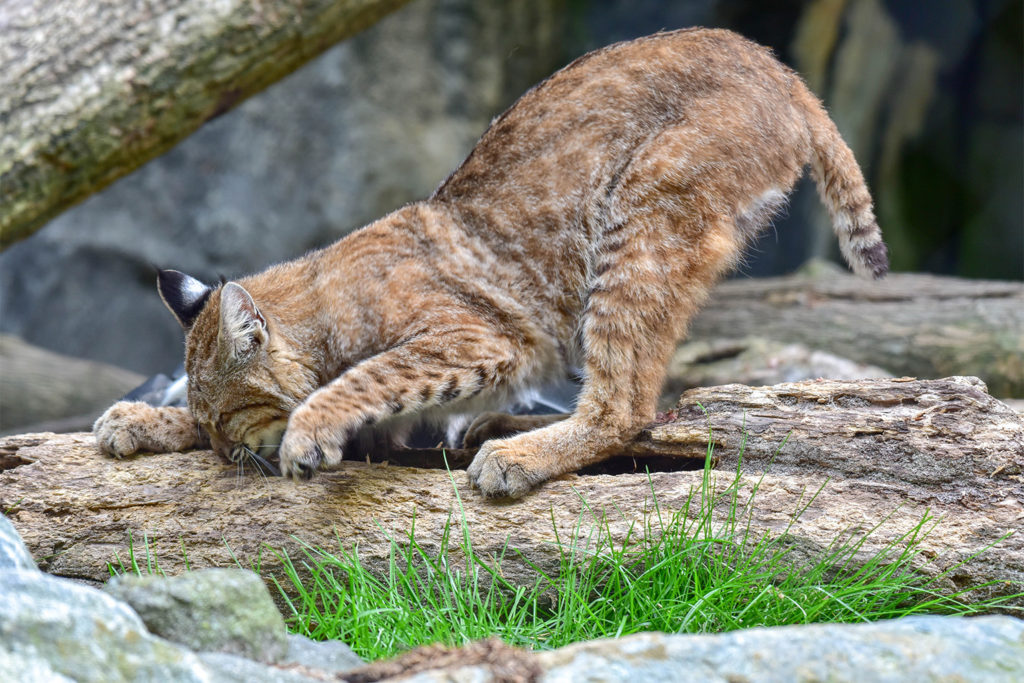
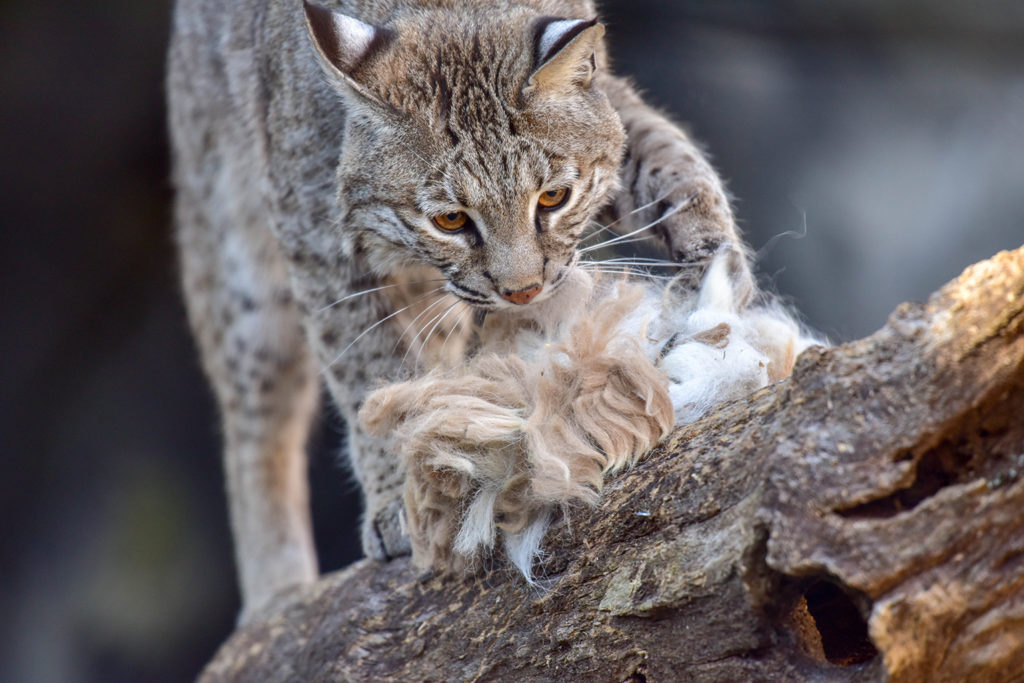
Kilgore was the first of the two bobcats to arrive at the Maryland Zoo, joining us from Oregon Zoo in 2016. When compared to Josie, Kilgore has a much fluffier body and more prominent “muttonchops” (fur puffing from the sides of his face). He is typically the more active of the two bobcats, heavily investigating enrichment items like wool, boxes, and ice treats to see if they have any mice. His favorite food item is young mice known as “fuzzies.”
Josie arrived from Tulsa Zoo in 2017. Prior to her time at the Tulsa Zoo, Josie was raised as a pet until the owner realized this was a mistake and she was taken in by the zoo community. Josie’s fur is more gray than Kilgore’s and she has a smaller, less fluffy body. While she spends more time resting than Kilgore typically does, she is quicker to investigate unique scents that zookeepers add to the habitat. She may spend several minutes rubbing her face on scents like thyme, parsley, donkey hoof trimmings, and even some perfumes. This face rubbing helps her gather information on new scents and lets her mark her own scent. When she finds an extra exciting scent, you may see her rub her entire body on it!
Where to Find Us
If guests can’t see a bobcat right away in their habitat at the Maryland Wilderness, rest assured that the bobcats can likely see the guests! The bobcats can be one of the trickiest animals to spot in the Zoo, as their fur lets them blend in extremely well with their habitat. The best way to get started on a search is to identify the spots that the bobcats most often spend their time: on the clifftops, on any hammocks (especially on a sunny day), or under any built shelters zookeepers have provided for them.
Kilgore most often spends his time on the clifftops on the left side of the habitat, allowing him the opportunity to survey both incoming guests and the forest behind the habitat.
Josie most often rests either in a hammock or shelter provided in the habitat, but will also perch up in the clifftops close to the waterfall to survey the forest.
Special Care
Have you ever wondered how the waterfalls found across the Zoo work? At the top of each waterfall there is a small pool that is constantly being filled with cycled clean water, and the water spills out to replicate waterfalls that animals may encounter in their native habitats. In the bobcat habitat, this small waterfall pool is accessible to the cats, and the steady flow of water is similar to jacuzzi jets! On especially hot days, look to the top of the waterfall to see if a bobcat is resting inside of the pool to cool off.
Conservation Status
Least Concern
This status means that the population of bobcats living in their native habitat is doing well. However, we still need to be mindful of how human actions affect wildlife and their homes. Like most wildlife in Maryland, bobcats are losing habitat due to forests cut down to expand land for human uses. Bobcat populations are also harmed when individuals are taken into people’s homes.
How you can help
Bobcats are not pets! Although taking wildlife into your home can feel helpful, keeping them as pets is quite harmful to the animals themselves and to the overall population. As young bobcats grow, they naturally become more aggressive. When eventually surrendered, the bobcats are often unable to survive in their natural habitat because they did not learn the proper skills early in their lives. When raised in people’s homes, bobcats and other wildlife lose their fear of humans and if released, may quickly enter into conflict with other people and animals.
Additionally, bobcat populations are at risk due to habitat loss from human development and irresponsible logging practices. When you’re purchasing wood or paper products, keep an eye out for certifications showing that the materials used to make them came from forest habitats that are being protected and managed sustainably.
How the Zoo is helping
Oftentimes when an animal is taken in to become a pet, they will be unable to return to their original habitat. Animals like bobcats may lose their ability to feed themselves and may try to approach humans to be fed, which can lead to dangerous interactions. These animals need an appropriate home to thrive, and the Maryland Zoo provides this home.
The Maryland Zoo’s Bobcat Exhibit is generously supported by Frostburg State University, home of the bobcats.
Taxonomy
- Kingdom: Animalia
- Phylum: Chordata
- Subphylum: Vertebrata
- Class: Mammalia
- Order: Carnivora
- Family: Felidae
- Genus: Lynx
- Species: L. Rufus
This exhibit is sponsored by