

Overview
Get to Know the Spotted Turtle!
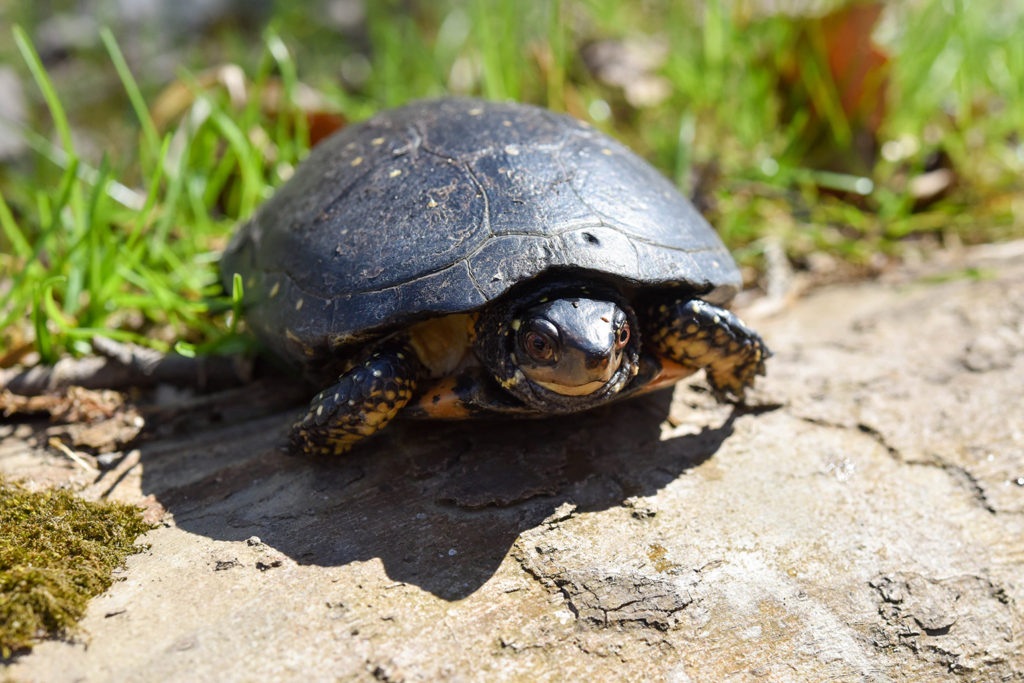
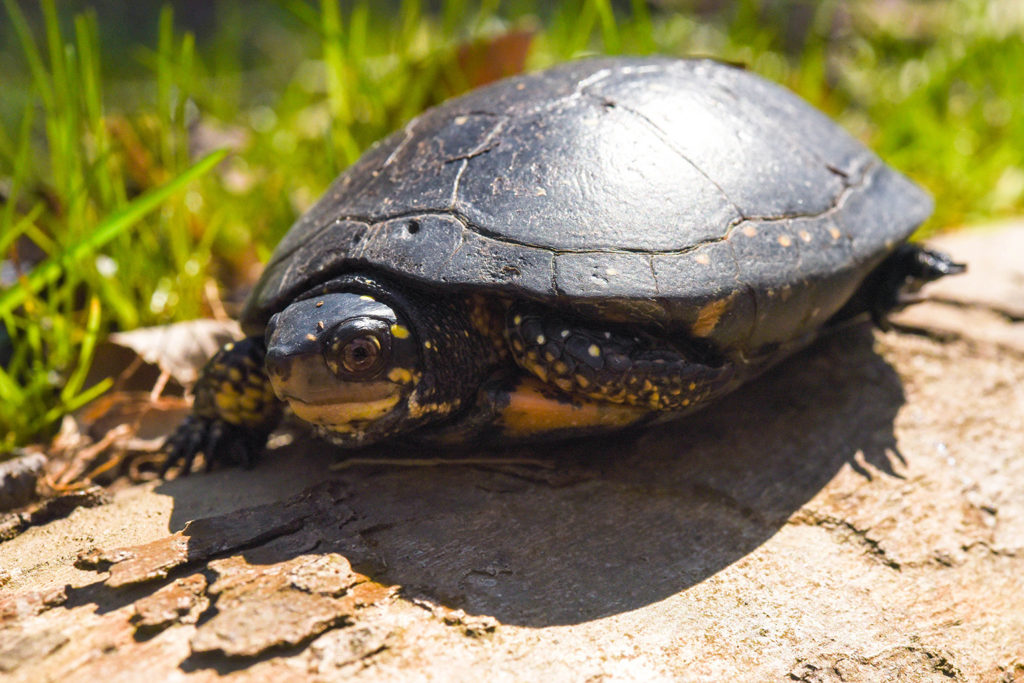
“Spotted turtle” is a fitting name for a small turtle species known for small yellow spots found on their entire body. Zookeepers can use the placement of spots on an individual to identify them among a group, especially when using spots on the head, as spots on the shell may start fading as the turtle ages. However, spotted turtles are generally solitary through most of the year, which is why this spotted turtle is in the habitat by themself.
Where to Find Me
The spotted turtle is most often swimming in their habitat in the Giant Tree in the Maryland Wilderness. However, they spend time on land as well, and can be surprisingly tough to spot (no pun intended). Check around the waterfall area first, as this is their basking area, then look along the walls to see if they have climbed a few inches up above the water surface. Spotted turtles typically spend most of the day in water, but they do rely on traversing tough terrain on land and are great climbers. Shallow wetlands can drastically change in terrain depending on recent rainfall, especially for a small turtle, so it helps to be nimble.
Special Care
Spotted turtles will spend time out of water basking under bright sources of heat, typically aiming for a spot around 90 degrees fahrenheit. This is easy for a spotted turtle living in their native range on a sunny day, but rainy and cloudy days are common in Maryland, which means that spotted turtles have an entirely different natural routine depending on if the sun is out. The zookeepers that care for the spotted turtle reflect this fact in their habitat by occasionally moving or removing the basking zones to simulate changing daily weather. You may also see this in other reptile habitats along the Maryland Wilderness.
Conservation Status
Endangered
This status means that the population of spotted turtles living in their native range is facing a very high risk of extinction and requires urgent ongoing conservation efforts. Spotted turtles are threatened mainly by habitat loss and degradation. As habitat loss takes its toll, it becomes even more challenging for each population to sustain itself. This species depends on long-term reproductive contributions from all adults, so the loss of even a few adults to pet collection or traffic accidents significantly harms a given population.
How you can help
If you’re interested or know anyone who is interested in having a pet turtle, ensure that the turtle is not wild-caught and is a species that is legal to own.
If you happen to see a spotted turtle outside in their native habitat, it is best to leave it alone, but you can help conservation researchers by reporting that you have seen one to your state’s wildlife agency (such as the Maryland DNR) or the U.S. Fish and Wildlife Service. Provide details on the location you saw them, even at a vague level. When you report a sighting, you help researchers understand that spotted turtles are present in specific ranges, sometimes even helping researchers discover new sites where these turtles live.
How the Zoo is helping
Many of the animals in the Maryland Zoo’s care that are native to Maryland are specifically native to Druid Hill Park, the park where the Zoo is located. The Maryland Zoo takes great care to ensure that zoo grounds benefit the wellbeing of all native animals found living within it. The Zoo prioritizes native plants, designs construction with wildlife safety in mind, and routinely surveys the grounds to check on the status of local populations.
Taxonomy
- Kingdom: Animalia
- Phylum: Chordata
- Subphylum: Vertebrata
- Class: Reptilia
- Order: Testudines
- Family: Emydidae
- Genus: Clemmys
- Species: C. guttata