
Overview
Get to Know Aurora and Ember!
Aurora and Ember both joined us at the Maryland Zoo in April 2026. As is typical for animals new to our Zoo, the red pandas spent time at the Zoo’s animal hospital after they arrived to ensure they were both in good health prior to moving to their brand-new zoo habitat. Both red pandas are getting to know their new spaces, and we will be getting to know them and their routines in the coming months. Check this page out in the near future to see updates about how Aurora and Ember enjoy spending time in their space!
Who’s Who
While the red pandas arrived at the Maryland Zoo around the same time, they were born in different zoos around 6 years apart: Aurora is about 7 years old and Ember is about 1 year old. With their age difference, telling the two apart is fairly easy.
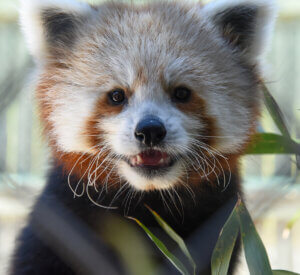
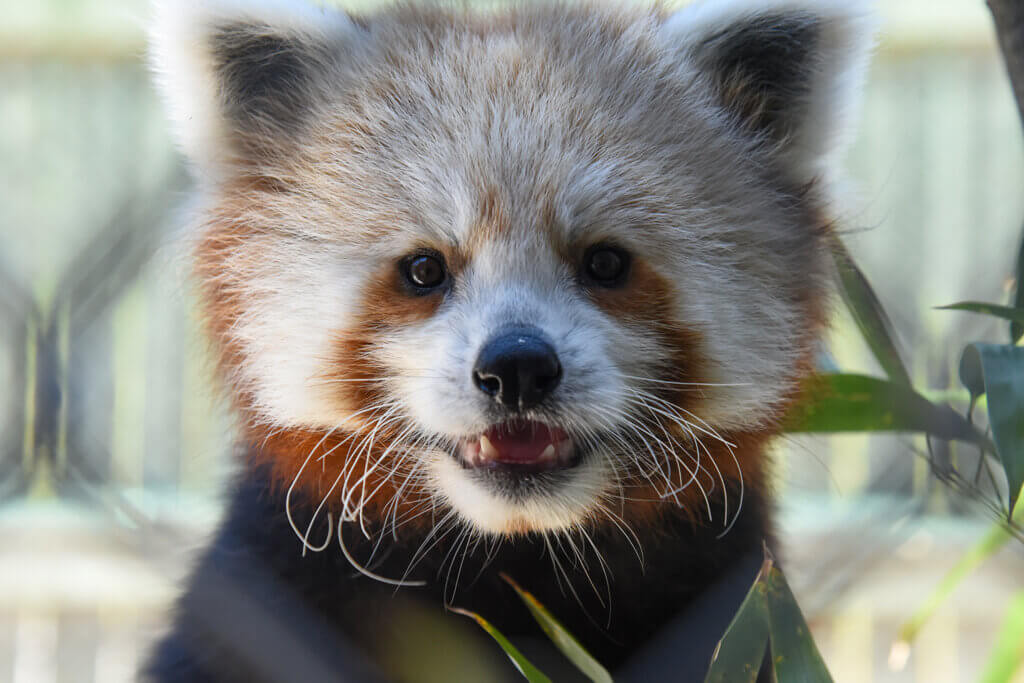
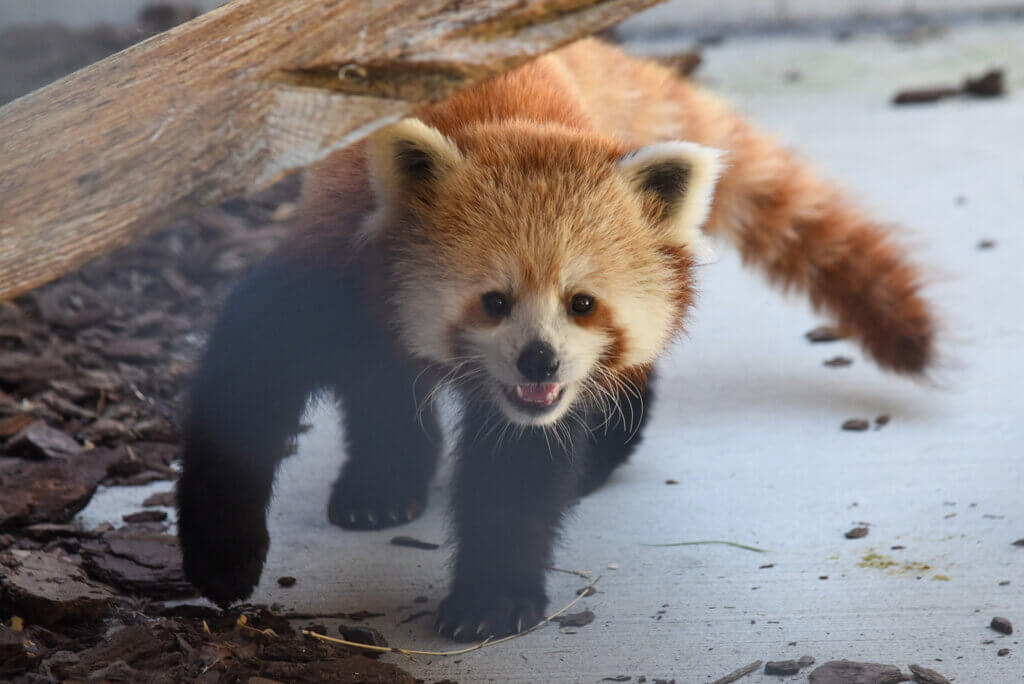
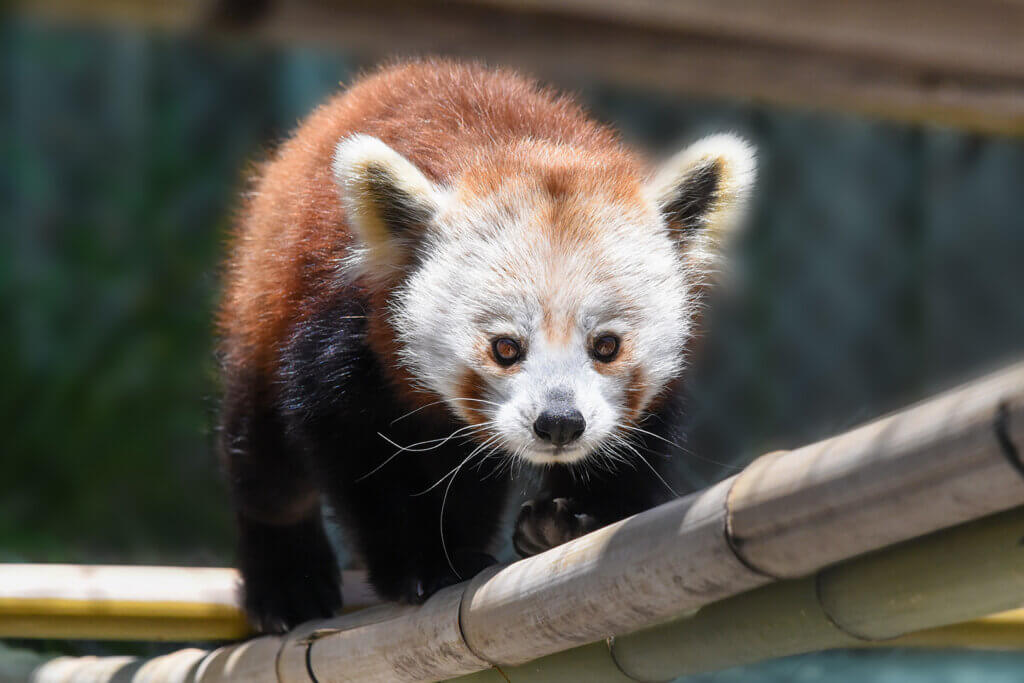
Ember has a fluffier body, a whiter face, a blonder tail, and curly whiskers. As she continues to mature, she will grow into the iconic red fur color that keeps red pandas well camouflaged among the red moss of Himalayan forests. She is more likely than Aurora to run around playfully and explore new things in her environment. Ember is still getting used to seeing new faces and will often approach new care staff timidly, but she looks quick to adjust!
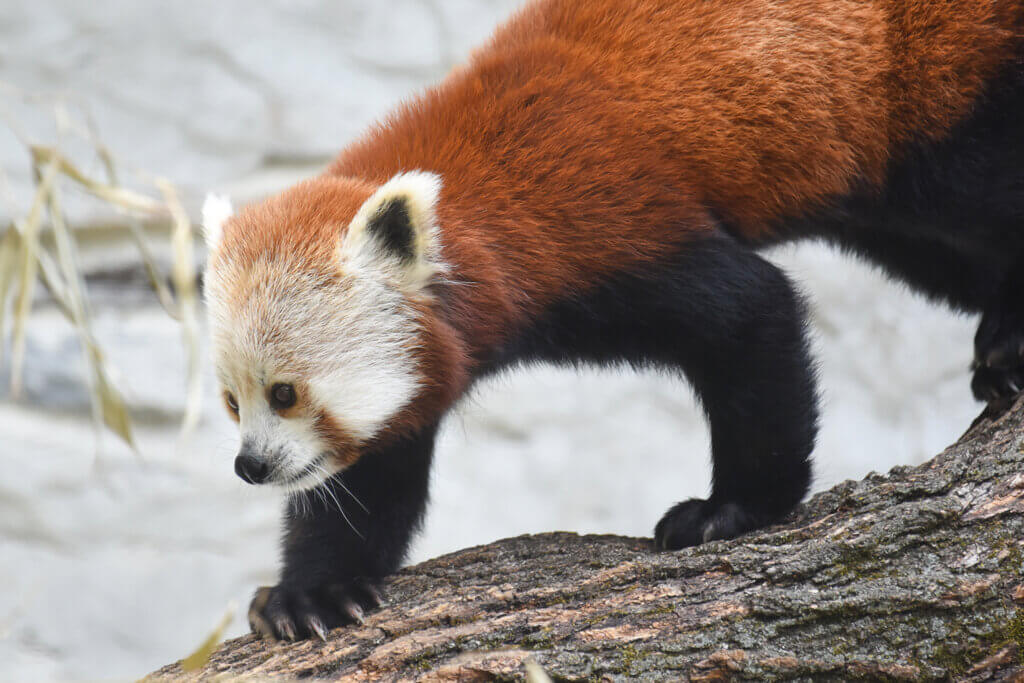
Aurora has a red, white, and black fur color that is very typical for an adult red panda. She is redder and a little less fluffy than Ember. Aurora is keen on napping (red pandas can sleep for up to 17 hours a day!), so will likely be spotted asleep on a high branch more often than Ember, potentially using her tail as a pillow. Aurora is much quicker to warm up to new caregivers, and is much less picky than her younger counterpart with which food rewards she will take during training sessions.
Where to Find Us
Red pandas are generally solitary animals, meaning that they prefer to spend their time in places without any other red pandas too close nearby. Because of this, Aurora and Ember will likely choose to spend their time in areas of their zoo habitat that are separate from one another.
Over the next few months the red pandas will be getting to know their new homes, so they have yet to decide on their favorite spots in their zoo habitat. Animal care staff have noticed that Aurora seems to prefer spending her time up high in her yard, basking in the sun, while Ember prefers to rest in enclosed spaces. If these trends continue in their new zoo habitat, look high for Aurora and look carefully for Ember!
Special Care
Although roughly 98% of a red panda’s diet is bamboo, red pandas will also eat other types of foods like fruits. Both red pandas at the Zoo are interested in either apples or applejuice-soaked biscuits, and will eagerly participate in training sessions with members of their care team when they offer these foods. When a red panda receives a piece of apple or biscuit, they will use their pseudo-thumbs (a special extension of their wristbone) to grip and munch on the food in their hands. The members of the animal care team are always delighted to see this! This pseudo-thumb is an adaptation that helps red pandas strip leaves from bamboo and climb tricky branches.
Conservation Status
Endangered
This status means that the population of red pandas living in their native range is facing a very high risk of extinction and requires ongoing conservation efforts.
Red pandas heavily rely on densely interconnected forests to travel through their native range. In the Himalayan mountain forests where they live, they can travel to regions almost 9,000 feet above their starting area (that’s about 9 Eiffel Towers!) in order to follow cool weather or find mates, largely moving via treetops the entire way. When human actions like deforestation start to fragment these forest ranges, it gets harder and harder for red pandas to travel. Conservationists are working on ways to both protect the remaining forest and to connect the existing patches with bridges for wildlife like red pandas.
We can protect red panda habitats by helping shift the demand away from wood and paper products that come from clear-cut forests. How can we all do this? By making careful choices about the wood and paper products we choose to buy! Keep an eye out for certifications on wood and paper products showing that the materials used to make them came from forest habitats that are being protected and managed sustainably.
Taxonomy
- Kingdom: Animalia
- Phylum: Chordata
- Subphylum: Vertebrata
- Class: Mammalia
- Order: Carnivora
- Family: Ailuridae
- Genus: Ailurus
- Species: A. fulgens