
Overview
Get to Know Pluff!
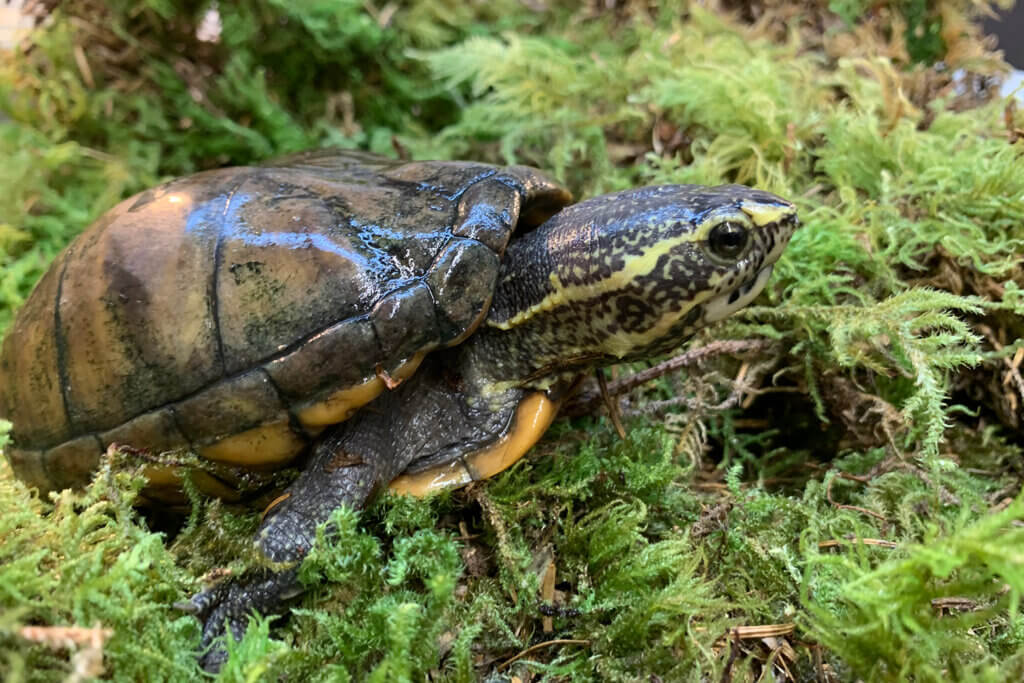
Pluff is a striped mud turtle, a Maryland native turtle that is known for three stripes that travel along the length of their shell. This is the second smallest species of turtle found in Maryland, the smallest being the incredibly rare bog turtle.
Where to Find Me
Pluff shares space with Olive, the common musk turtle, in a Cave habitat in the Maryland Wilderness. Although striped mud turtles are typically slightly smaller than common musk turtles, Pluff the mud turtle is larger than Olive the musk turtle.
Pluff is typically swimming low in the water close to the display glass of her habitat. If not there, she may be tucked into the nooks and crannies of the logs and other structures within her habitat. Look low and look for a rock shape that is much larger than the rocks in the habitat pool.
Special Care
Striped mud turtles spend the majority of their day underwater or buried. However, they are occasionally known to move to land to bask or travel to new habitats. In Pluff’s habitat, guests may notice several structures that provide opportunities for her to move onto land, and some of those structures even have digging opportunities. It’s important for all animals in the Maryland Zoo, big and small, to have choices and opportunities to engage in all behaviors they use in their natural habitats.
Conservation Status
Least Concern
This status means that the population of striped mud turtles living in their native habitat is doing well, but there are always opportunities to ensure this species can continue thriving.
How you can help
All animals thrive when their habitats are in excellent condition. When you respect and care for local habitats, you’re helping these animals thrive. Keep habitats clean of trash and chemicals, stick to designated nature paths, and encourage the growth of native plants on land in your care.
How the Zoo is helping
Many of the animals in the Maryland Zoo’s care that are native to Maryland are specifically native to Druid Hill Park, the park where the Zoo is located. The Maryland Zoo takes great care to ensure that zoo grounds benefit the wellbeing of all native animals found living within it. The Zoo prioritizes native plants, designs construction with wildlife safety in mind, and routinely surveys the grounds to check on the status of local populations.
Taxonomy
- Kingdom: Animalia
- Phylum: Chordata
- Subphylum: Vertebrata
- Class: Reptilia
- Order: Testudines
- Family: Kinosternidae
- Genus: Kinosternon
- Species: K. baurii