

Overview
Get to Know Brie and Hudson!
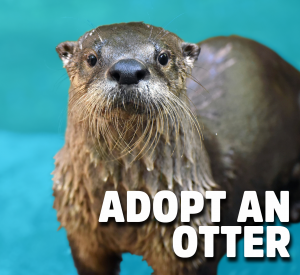
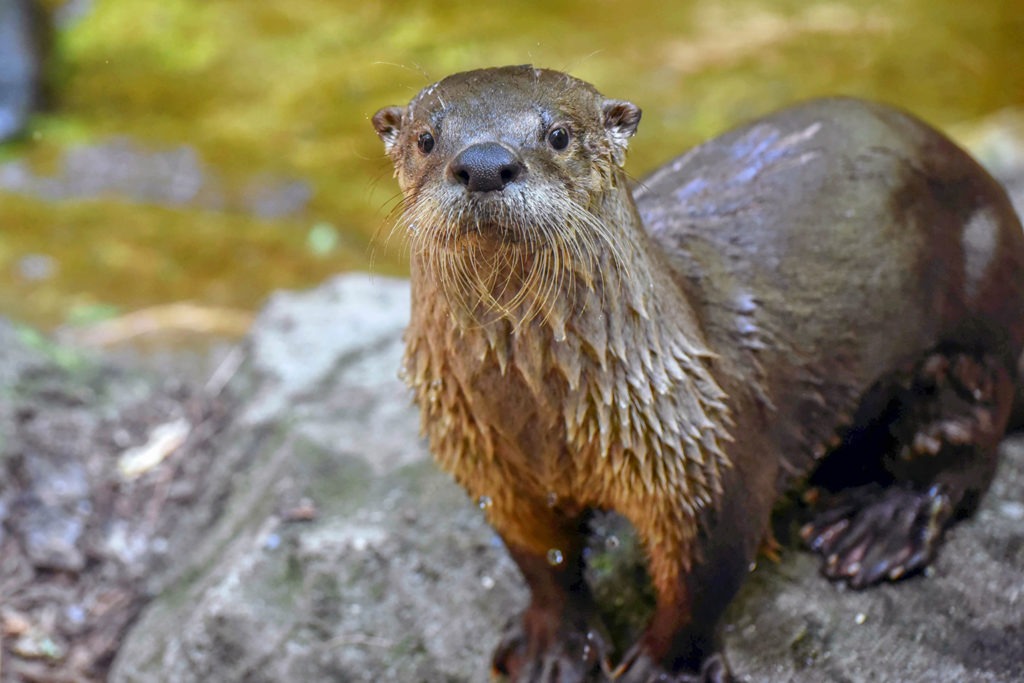
North American river otters like Brie and Hudson are one of two species of otter found in the United States, the other species being the sea otter. Between the two species, North American river otters are smaller, more solitary, and are typically found swimming with their bellies down instead of floating with their bellies up, although some river otters like Brie will still often swim belly-up.
Who’s Who
Hudson has been at the Maryland Zoo since 2016, joining us from the Oregon Zoo. He has light-brown fur that is almost dark blond after he wakes up dry from a nap in the sun. Compared to Brie, he has a wider face, longer whiskers, and a shorter and much more rounded tail tip. Since he arrived at the Zoo, Hudson has always been a very relaxed otter, swimming slowly in the habitat shallows, perching on rocks along the pool, or rolling around on logs on a sunny day. He is a particularly picky fish eater– on his pickiest days, keepers need to prepare fish for him carefully to ensure he won’t be getting any fish heads, or he will just spit the heads out!
Brie joined the Maryland Zoo in 2023 from the Milwaukee Zoo. With darker fur than Hudson, she is an exceptionally long-tailed otter, which helps her with diving, flipping and swimming through the water quickly and silently. Brie is regularly on the move and always ready to explore the nooks and crannies of the habitat, peeking through hollow logs and churning up leaves on the bottom of the pool in a search for insects or other foods. She is fast to try out puzzle enrichment that keepers put out in the habitat. In fact, she has been an impressive puzzle-solver since day one, clearing items of food in seconds flat. If guests see an otter swimming in the water with their belly facing toward the sky, or an otter standing on their hind legs surveying their habitat, they are very likely seeing Brie.
Where to Find Us
Otters Hudson and Brie can both be seen just about anywhere in the otter habitat in the Maryland Wilderness. If guests are having a tough time spotting an otter, they’re advised to stick around for a bit, especially looking outward from the sandy beach viewing. They may notice ripples cutting through the water or little heads popping out from behind logs very quickly. Otters most commonly spend their time swimming along the pool (best viewable from the underwater tunnel) or rolling around in the mulch and straw on the elevated land area in the center of the habitat.
Special Care
Guests walking through the Maryland Wilderness might sometimes hear a ringing bell, a honking horn, or a bike alarm. These are all unique sounds played by zookeepers that the otters have been trained to recognize and respond to in unique ways. The ringing bell means to approach the ringing for a fish toss, the honking horn tells Hudson to move inside to a behind-the-scenes space, and the bike alarm tells Brie to move inside. These cues give the keepers the ability to move otters through their environment to clean and prepare their spaces with ease, which is not an easy feat for such an active and agile species.
Conservation Status
Least Concern
This status means that the population of North American river otters living in their native habitat is doing well, but there are always opportunities to ensure this species can continue thriving.
How you can help
Otters are known as an indicator species, meaning that their presence indicates a healthy established habitat of multiple other species in order to have them around– in an otter’s case, their presence usually means that there are plenty of healthy fish nearby for them to eat. All animals thrive when their habitats are in excellent condition. When you respect and care for local habitats, you’re helping these animals thrive. Keep habitats clean of trash and chemicals, stick to designated nature paths, and encourage the growth of native plants on land in your care.
How the Zoo is helping
Many of the animals in the Maryland Zoo’s care that are native to Maryland are specifically native to Druid Hill Park, the park where the Zoo is located. North American river otters aren’t commonly spotted in Druid Hill Park, but there have been signs of them stopping by!
The Maryland Zoo takes great care to ensure that zoo grounds benefit the wellbeing of all native animals found living within it. The Zoo prioritizes native plants, designs construction with wildlife safety in mind, and routinely surveys the grounds to check on the status of local populations.
Taxonomy
- Kingdom: Animalia
- Phylum: Chordata
- Subphylum: Vertebrata
- Class: Mammalia
- Order: Carnivora
- Family: Mustelidae
- Genus: Lontra
- Species: L. canadensis
This exhibit is sponsored by