

Overview
Get to Know Squish!
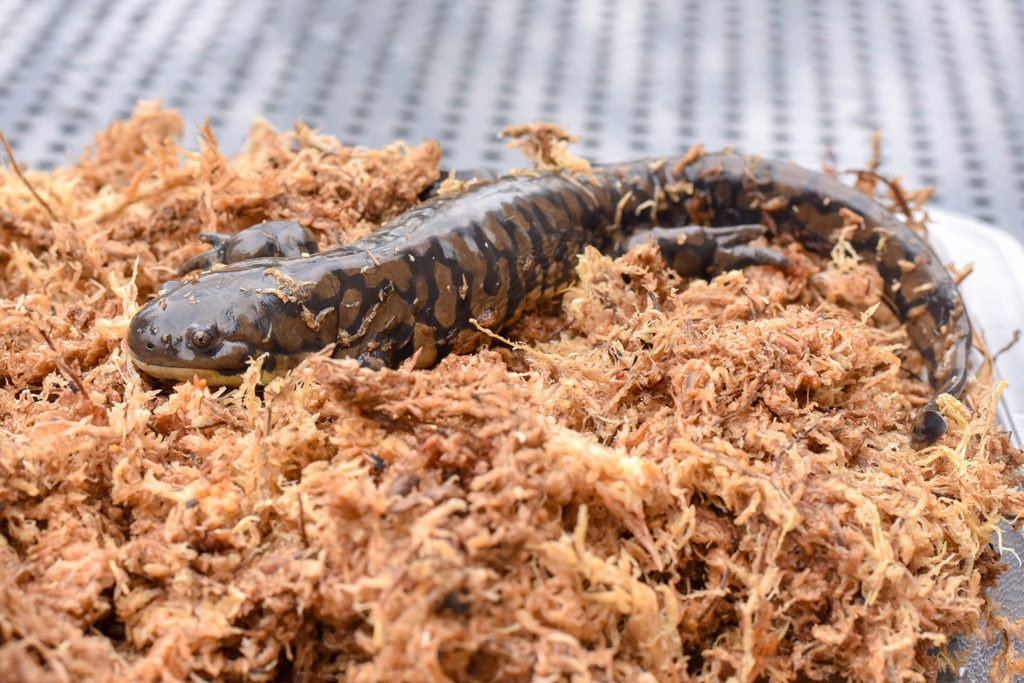
Squish is an Eastern tiger salamander, one of three known species of tiger salamanders in the United States. All three species of tiger salamanders get their name from vivid yellow stripes along their body. This yellow coloration is known as an aposematic signal, which is a warning signal to potential predators that they secrete toxins from their skin that make them taste disgusting and potentially cause illness if eaten. While Squish still secretes these chemicals (which are harmless to humans as long as you wash your hands after handling), she does not have yellow markings. She is two shades of stripy brown, which allows her to blend in extremely well with her mossy habitat.
Where to Find Me
Eastern tiger salamanders are highly fossorial, meaning they spend a lot of the day at least partially buried underground. Squish is no exception to this rule, so she will regularly be found peeking out from underneath the moss in the center of her habitat in the Tree in the Maryland Wilderness. However, Squish is also very food-motivated and has a tendency to watch people at the glass, especially during the early hours of the day. When she is watching, she is typically in plain sight on the ground of the habitat.
Special Care
Eastern tiger salamanders may not look it, but they are well-prepared successful carnivores. They have been known to eat just about any animal that will safely fit in their mouths, from worms to crickets to small field mice. Because of this, zookeepers who care for Squish will often stock her habitat with crickets, who will live among the moss of the habitat until they wander close to Squish’s mouth. Squish will eagerly hunt insects in her habitat, moving with good speed although it may look fairly clumsy.
Conservation Status
Least Concern
This status means that the population of Eastern tiger salamanders living in their native habitat is doing well, but there are always opportunities to ensure this species can continue thriving.
How you can help
Like all Maryland reptiles and amphibians, you can help keep their populations healthy by respecting the environments in which they are found. Salamanders are a vital component of a healthy sustainable ecosystem and rely on food, shelter, and clean water to thrive. For them, respecting their environment means leaving shelters like logs and rocks untouched, encouraging native plants to grow and avoiding the use of pesticides that may harm them and their prey.
How the Zoo is helping
Many of the animals in the Maryland Zoo’s care that are native to Maryland are specifically native to Druid Hill Park, the park where the Zoo is located. The Maryland Zoo takes great care to ensure that zoo grounds benefit the wellbeing of all native animals found living within it. The Zoo prioritizes native plants, designs construction with wildlife safety in mind, and routinely surveys the grounds to check on the status of local populations.
Taxonomy
- Kingdom: Animalia
- Phylum: Chordata
- Subphylum: Vertebrata
- Class: Amphibia
- Order: Caudata
- Family: Ambystomatidae
- Genus: Ambystoma
- Species: A. tigrinum