

Overview
Get to Know Babe!
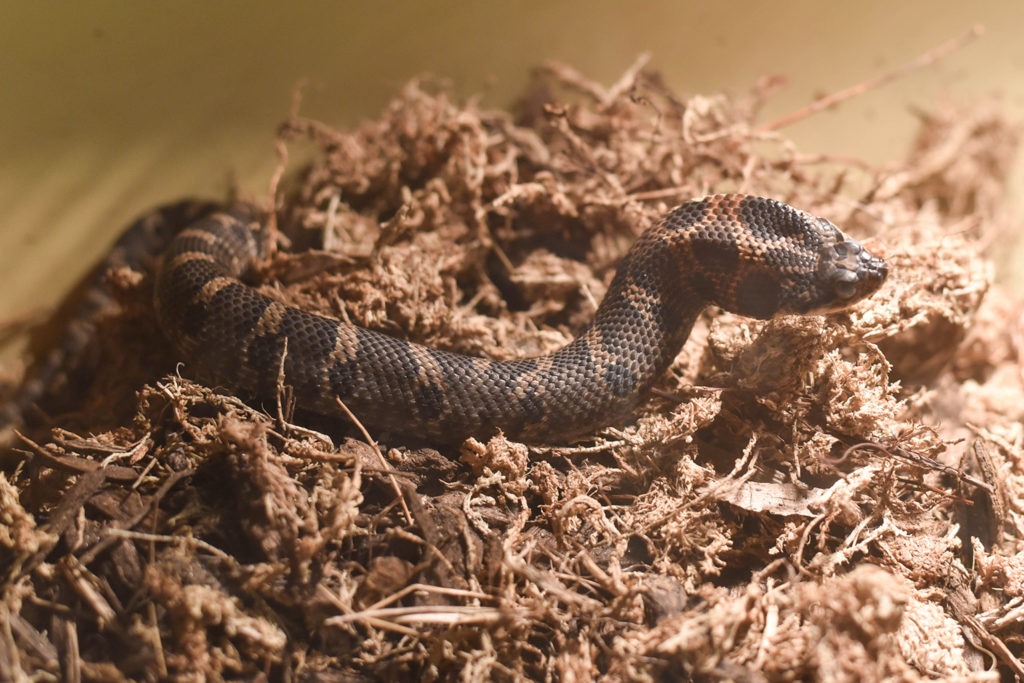
Babe is an Eastern hognose snake, the name “Hognose” coming from their distinct upturned snouts. Eastern Hognoses can be found across Eastern North America in a massive variety of colors and patterns ranging from a vivid red to a dark black. Babe is dark black, also known as “melanistic,” and this color of Eastern hognose is most commonly found in the more northern regions of their native range. The dark colors help Babe retain heat, which is ideal for colder climates.
Where to Find Me
Babe prefers the shaded areas of his habitat in the Giant Tree in the Maryland Wilderness. His habitat has several overhangs along the rocky walls, and he is often found directly underneath the overhang in the center, well tucked into the dark. With his black scales, he blends in very well with his darker environment, and guests may need to take a moment to spot him. Babe also spends time buried underneath the mulch or moss– Eastern Hognose snakes are fossorial, meaning that they spend a significant amount of time underground. Their unique upturned snouts help them cut through moss and soil with ease.
Special Care
Hognose Snakes are famous for their dramatic displays when confronted with a potential threat. First, hognoses will typically puff out their sides and flatten their heads, imitating the look of a cobra. They will then fake a strike towards the threat, often along with loudly puffing out air. If this fails, then will then “play dead,” rolling onto their backs, sticking out their tongues, secreting a foul odor and laying still. This two-act performance first tries to deter threats by appearing dangerous (although they are harmless to most animals other than toads and other very small animals), then trying to advertise that they are a “spoiled,” undesirable meal.
Zookeepers at the Maryland Zoo will say with pride that they have never seen this full display. When hognoses “play dead,” they are doing so under a significant level of stress after failing to evade a potential predator. Keepers work tirelessly to achieve a stress-free environment for animals in their care, and therefore do not see this stress-based behavior!
Conservation Status
Least Concern
This status means that the population of Eastern hognoses living in their native range is doing well, but there are always opportunities to ensure this species can continue thriving.
How you can help
All animals thrive when their habitats are in excellent condition. When you respect and care for local habitats, you’re helping these animals thrive. Keep habitats clean of trash and chemicals, stick to designated nature paths, and encourage the growth of native plants on land in your care.
How the Zoo is helping
Many of the animals in the Maryland Zoo’s care that are native to Maryland are specifically native to Druid Hill Park, the park where the Zoo is located. The Maryland Zoo takes great care to ensure that zoo grounds benefit the wellbeing of all native animals found living within it. The Zoo prioritizes native plants, designs construction with wildlife safety in mind, and routinely surveys the grounds to check on the status of local populations.
Taxonomy
- Kingdom: Animalia
- Phylum: Chordata
- Subphylum: Vertebrata
- Class: Reptilia
- Order: Squamata
- Family: Dipsadidae
- Genus: Heterodon
- Species: H. platirhinos