
Overview
Get to Know Almond!
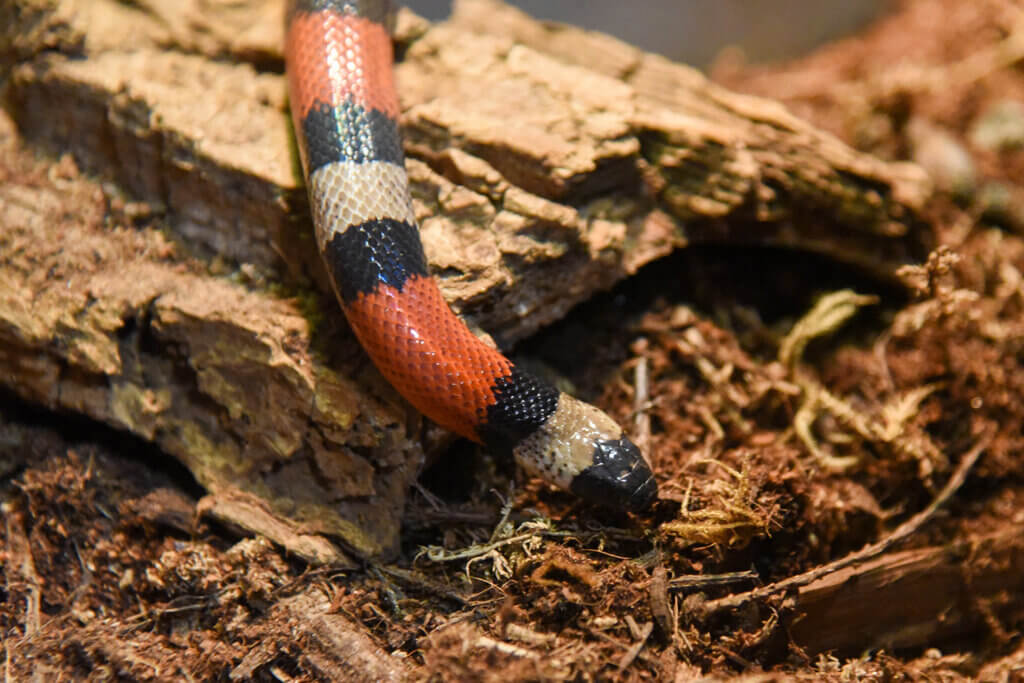
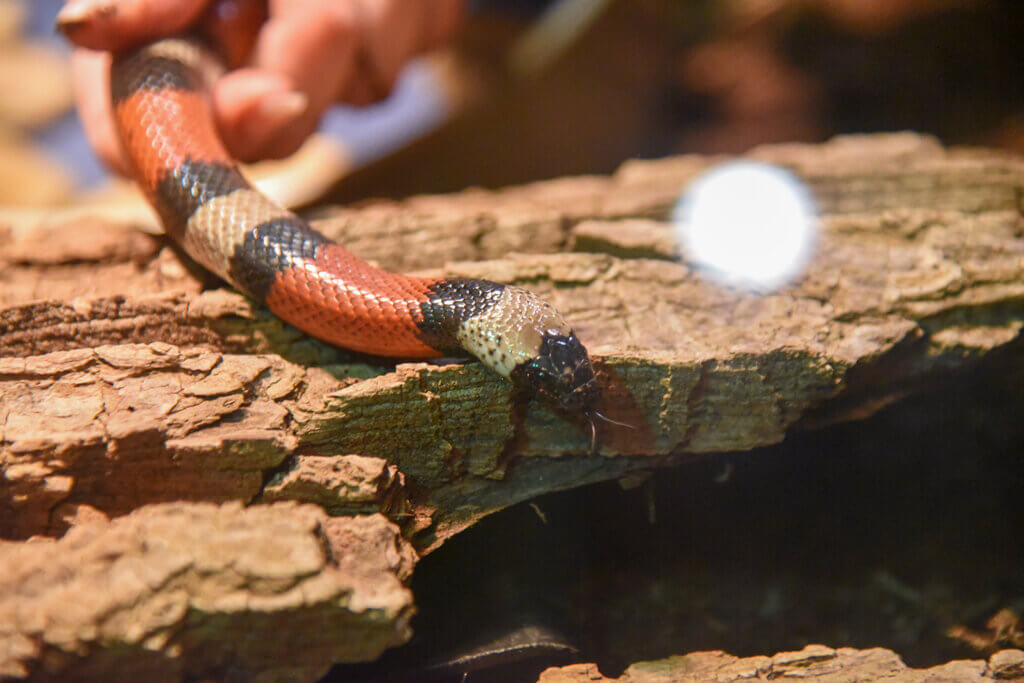
Milk snakes like Almond are non-venomous and especially harmless to humans, preferring to keep their distance as much as possible. With their red, black and yellow coloration, they are often mistaken for the venomous coral snake.
Where to Find Me
Almond is found in a Meadow habitat at the edge of the Maryland Wilderness. With their vivid coloration they are hard to miss when out in the open, but there is always a chance that Almond is underground. Pueblan milk snakes are fossorial, meaning that they spend a significant portion of their lives underground or tucked under rocks and logs. If Almond chooses to spend time underground, guests may often spot a small colorful segment of their body peeking out from the ground.
Special Care
Considering that Almond often chooses to spend time underground, zookeepers must keep in mind that their underground space needs to be just as safe and engaging as their above-ground space. Just a few inches under the soil, there are various rocks, crevices, and artificial vines. These features make a more complex and engaging environment for Almond to explore.
Conservation Status
Least Concern
Pueblan milk snakes are native to Mexico, but there are multiple species of milk snakes that are in the United States, including the Eastern milk snake in Maryland. The Eastern milk snake is also listed as Least Concern. This status means that the populations of Pueblan and Eastern milk snakes living in their native habitats are doing well, but there are always opportunities to ensure this species can continue thriving.
How you can help
All animals thrive when their habitats are in excellent condition. When you respect and care for local habitats, you’re helping these animals thrive. Keep habitats clean of trash and chemicals, stick to designated nature paths, and encourage the growth of native plants on land in your care.
How the Zoo is helping
Many of the animals in the Maryland Zoo’s care that are native to Maryland are specifically native to Druid Hill Park, the park where the Zoo is located. The Maryland Zoo takes great care to ensure that zoo grounds benefit the wellbeing of all native animals found living within it. The Zoo prioritizes native plants, designs construction with wildlife safety in mind, and routinely surveys the grounds to check on the status of local populations.
Taxonomy
- Kingdom: Animalia
- Phylum: Chordata
- Subphylum: Vertebrata
- Class: Reptilia
- Order: Squamata
- Family: Colubridae
- Genus: Lampropeltis
- Species: L. Polyzona