

Overview
Get to Know Colonel!
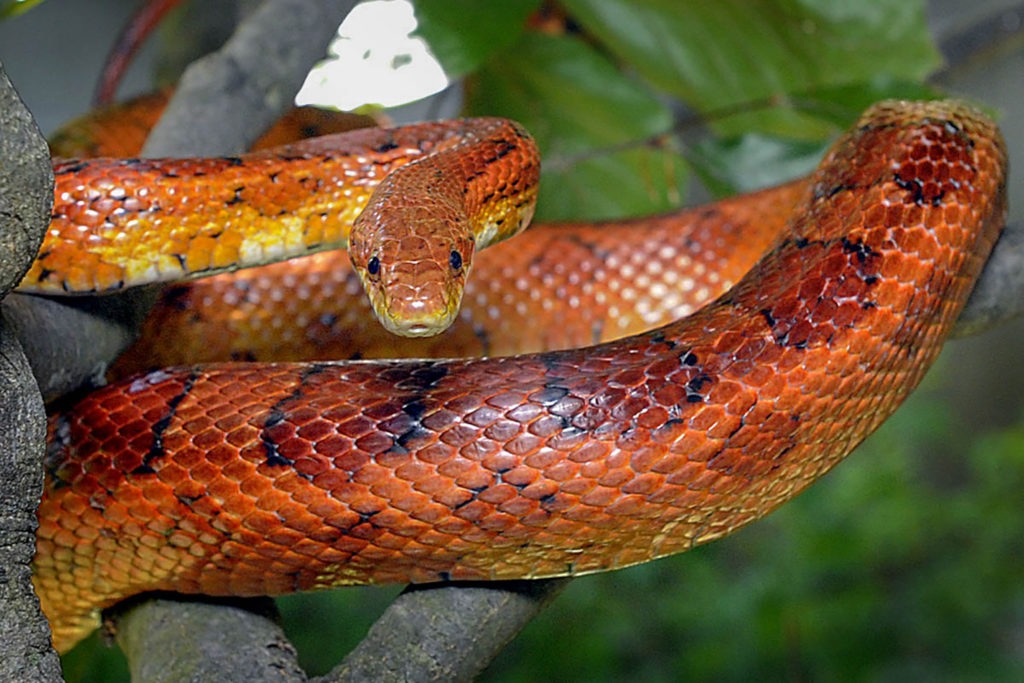
Corn snakes like Colonel are found with a variety of different natural colorations like red, brown, orange (like Colonel), or gray. They are also known for the black and white checkerboard pattern found on their bellies.
Where to Find Me
Corn snakes like Colonel are semi-fossorial (fossorial means “burrowing”), meaning he splits his time between living above ground and buried below the ground. Colonel is often above ground basking in plain sight in his Meadow habitat in the Maryland Wilderness. If he’s not quick to spot, he is potentially resting under logs or buried in moss placed high up in the habitat. Several of the habitats in the Maryland Wilderness have deep bowls built into the rock walls of the habitat spaces which provide an opportunity for plants to grow as well as an excellent digging area for snakes like Colonel.
Special Care
When keepers open the door to take care of Colonel and his habitat, Colonel is typically very quick to approach the keepers out of curiosity. He has years of experience with humans and being held, and is very ready to climb up a keeper’s arm. Colonel knows there is always a chance he might get a mouse from the keepers, so there’s nothing but good reasons to come out when the habitat door opens.
Corn snakes are one of the most popular snakes for those that choose to have a pet snake at home. They are incredibly calm, curious, and colorful, with each individual very unique from the next. If you choose to have a corn snake as a pet, remember to be careful about where you are getting the snake from– corn snakes may be collected from the wild for the pet trade, which is an illegal practice in Maryland and is an overall unsustainable act. Do your research on reputable sources to obtain a corn snake, and make sure you’re up for the 20 years of responsibility to provide excellent care!
Conservation Status
Least Concern
This status means that the population of corn snakes living in their native range is doing well, but there are always opportunities to ensure this species can continue thriving.
How you can help
All animals thrive when their habitats are in excellent condition. When you respect and care for local habitats, you’re helping these animals thrive. Keep habitats clean of trash and chemicals, stick to designated nature paths, and encourage the growth of native plants on land in your care.
How the Zoo is helping
Many of the animals in the Maryland Zoo’s care that are native to Maryland are specifically native to Druid Hill Park, the park where the Zoo is located. The Maryland Zoo takes great care to ensure that zoo grounds benefit the wellbeing of all native animals found living within it. The Zoo prioritizes native plants, designs construction with wildlife safety in mind, and routinely surveys the grounds to check on the status of local populations.
Taxonomy
- Kingdom: Animalia
- Phylum: Chordata
- Subphylum: Vertebrata
- Class: Reptilia
- Order: Squamata
- Family: Colubridae
- Genus: Pantherophis
- Species: P. guttatus