
Overview
Get to Know the Treefrogs!
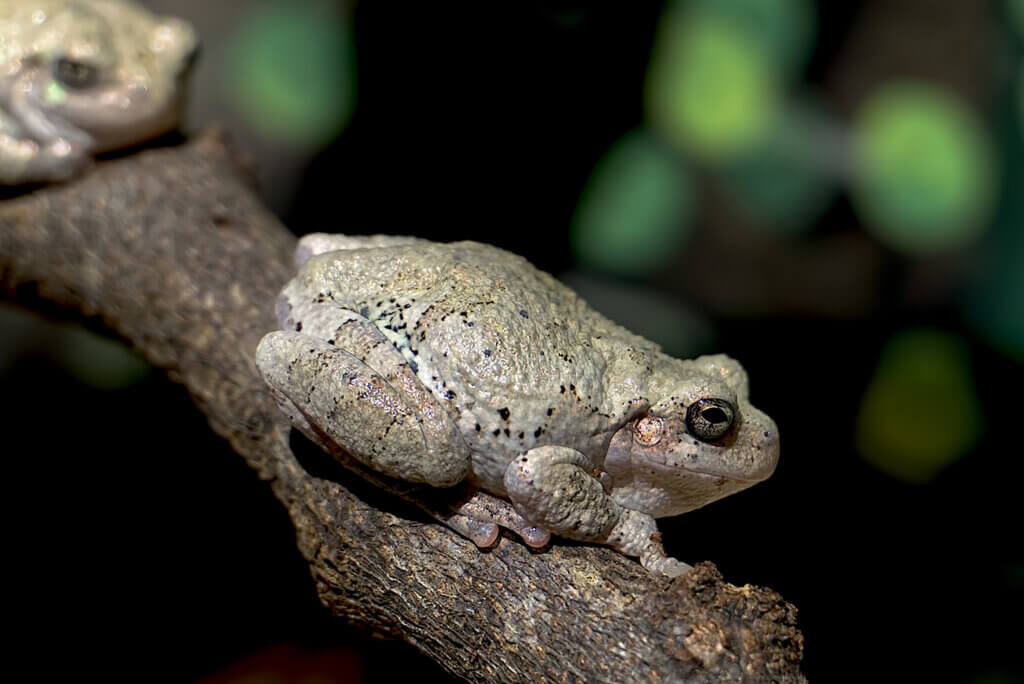
Cope’s gray treefrogs are a common frog throughout Maryland, but it’s normal for lifelong Maryland residents to have never seen one. Their small size, their excellent camouflage, and their tendency to tuck away into crevices make them one of the trickiest animals to spot in their native habitat. To know if this species is around, it’s best to listen out for their calls– on warm humid days, Cope’s gray treefrogs make unique high-pitched trilling sounds. In fact, because their calls are most often heard as humidity is climbing, they are often a solid indicator that rain is about to fall.
Who’s Who
The treefrogs do not normally have easy ways for zookeepers to tell them apart like the majority of animals at the Maryland Zoo. However, if any of the frogs show signs of needing extra attention, they can be given a harmless dye so that their health can be tracked over time. This is a subtle dye under normal light, but glows under a black light!
Where to Find Us
The treefrogs are in a Giant Tree habitat in the Maryland Wilderness, but are truly experts at hiding in plain sight. Their coloration, along with their rough-looking skin texture, allow them to blend in seamlessly with the branches and rockwork in their habitat. Guests may not spot a single frog for a few seconds when scanning their habitat, but they have a tendency to suddenly “pop out” with a little patience.
Special Care
Zookeepers will routinely weigh all of the treefrogs in order to make sure that the group is at a healthy weight. In order to do this, keepers will carefully place each treefrog in a plastic deli cup and weigh the cup! Each treefrog weighs around 10 grams, close to the weight of two nickels.
Conservation Status
Least Concern
This status means that the population of Cope’s gray treefrogs living in their native habitat is doing well, but there are always opportunities to ensure this species can continue thriving.
How you can help
All animals thrive when their habitats are in excellent condition. When you respect and care for local habitats, you’re helping these animals thrive. Keep habitats clean of trash and chemicals, stick to designated nature paths, and encourage the growth of native plants on land in your care.
How the Zoo is helping
Many of the animals in the Maryland Zoo’s care that are native to Maryland are specifically native to Druid Hill Park, the park where the Zoo is located. The Maryland Zoo takes great care to ensure that zoo grounds benefit the wellbeing of all native animals found living within it. The Zoo prioritizes native plants, designs construction with wildlife safety in mind, and routinely surveys the grounds to check on the status of local populations.
Taxonomy
- Kingdom: Animalia
- Phylum: Chordata
- Subphylum: Vertebrata
- Class: Amphibia
- Order: Anura
- Family: Hylidae
- Genus: Hyla
- Species: H. chrysoscelis