

Overview
Get to Know the Alpaca Herd!
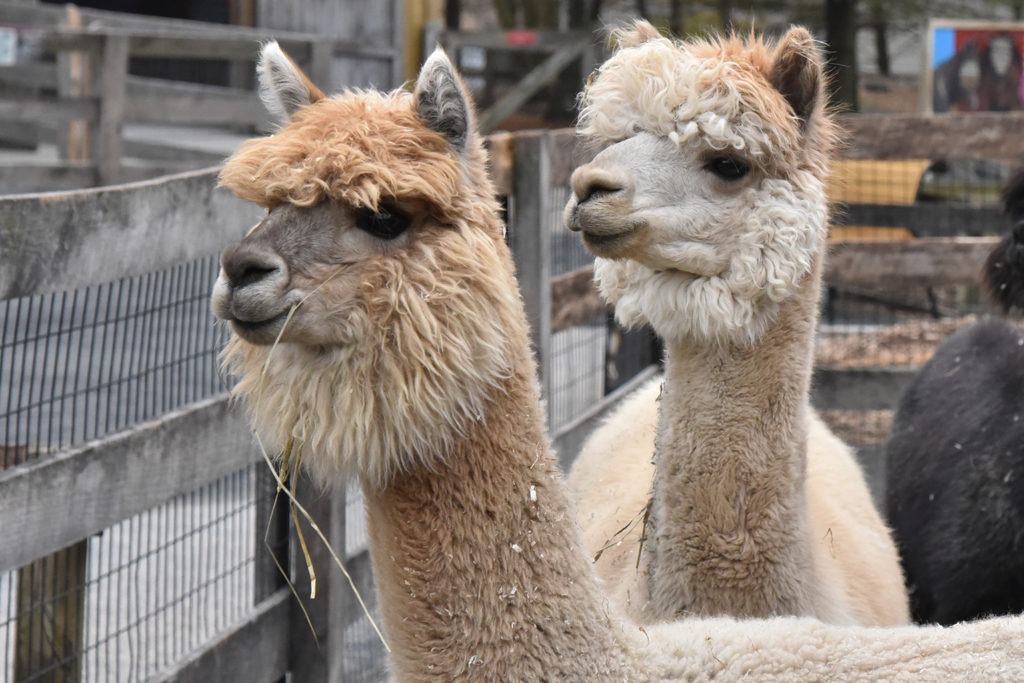
Alpacas are social animals, and thrive as part of a group. The members of the Zoo’s herd arrived here in 2014, and have therefore been together for most of their lives. You can easily tell them apart by their wool color. Aleluya (“Allie”), born in 2006, has light tan wool and a sloping snout. Tagalong (“Tag”), born in 2009, is the smallest one in the group, and her wool is black. Annabelle, born in 2012, has tan wool and large, bright eyes.
All the alpacas at the Zoo enjoy tactile (touch) enrichment, so they eagerly interact with items that they can rub on. Tag enjoys spending extended periods of time interacting with the sprinklers. Allie is more partial towards food enrichment than physical items. She enjoys receiving romaine lettuce and sweet potato from her keepers.
In spite of their cozy coats, the alpacas at the Zoo enjoy sunbathing on a hot day. On a visit, you may find one or more of them sprawled on the ground in the sun with their necks outstretched!
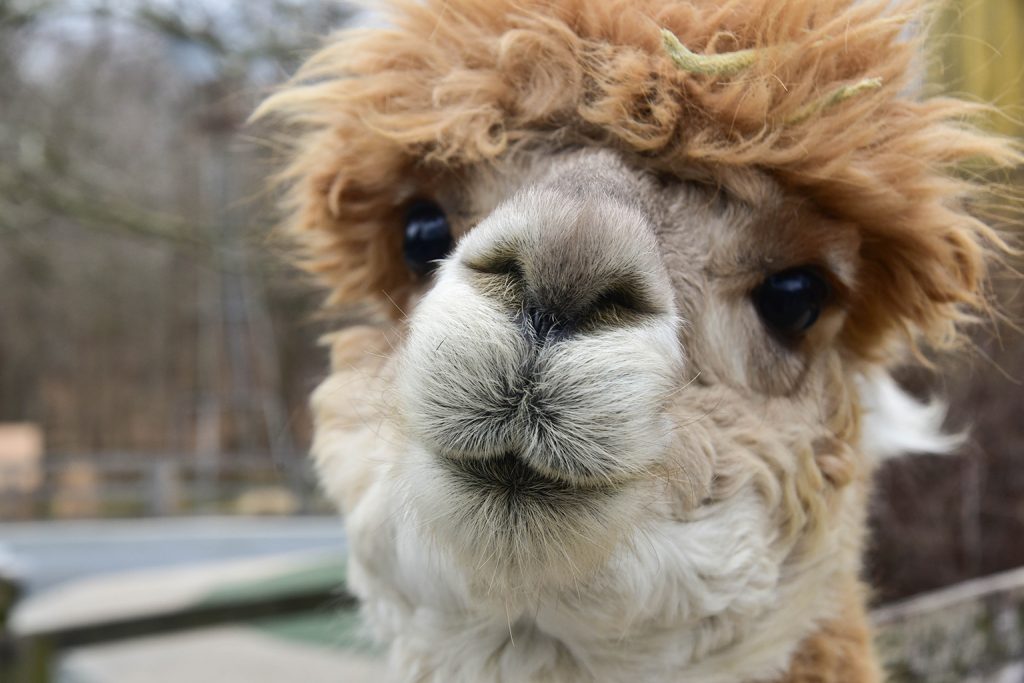
The wool of an alpaca is one of the warmest and finest in the world. Huacaya (Wa-kee-a) alpacas have dense, crimped wool, while Suri (Sur-ee) alpacas have fine wool that grows in long locks. Most alpacas in North America, including those at the Maryland Zoo, are Huacaya.
Here at the Zoo, the alpacas are sheared (have their wool cut) each year in the spring. Afterwards, animal care staff may give some of the wool to other animals, like the bobcats or leopard, to enjoy as an interesting scent. Additional wool is also used to create wool dryer balls, a more environmentally friendly replacement for laundry dryer sheets. These dryer balls are occasionally sold in the Zoo’s Wild Things gift shop.
Conservation Status
Alpacas are a domestic breed, which means that they live closely alongside people. Because they are a domestic breed, they do not have an official conservation status.
Taxonomy
- Kingdom: Animalia
- Phylum: Chordata
- Subphylum: Vertebrata
- Class: Mammalia
- Order: Artiodactyla
- Family: Camelidae
- Genus: Vicugna
- Species: V. pacos
Physical Description
Alpacas are the smallest of the domesticated camelid species. They have slender bodies, long and shaggy necks, and camel-like faces. Huacaya (Wa-kee-a) alpacas have dense, crimped fleece while Suri (Sur-ee) alpacas have fine, lustrous fleece that grows in long locks. About 90% of all alpacas in North America are Huacaya, including those at the Zoo. See them in the Farmyard in the Zoo’s Maryland Wilderness section.
Origins
Alpacas are native to the central and southern Andes Mountains, from Peru to Argentina.
Introduction to North America
Peru began exporting alpacas in the mid-1980s. They have since become a popular breed of domesticated livestock in the United States and other countries, including New Zealand, Australia, and the Netherlands. Importation of alpacas from South America is now closed.
Uses
Alpacas are raised for their fleece, which is one of the warmest and finest in the world. Alpaca fleece is used to make luxurious clothing, blankets, and other textile products. Many alpaca owners also breed their animals to be shown competitively.