
Overview
Get to Know Banjo!
Cope’s gray treefrogs are a common frog throughout Maryland, but it’s normal for lifelong Maryland residents to have never seen one. Their small size, their excellent camouflage, and their tendency to tuck away into crevices make them one of the trickiest animals to spot in their native habitat. To know if this species is around, it’s best to listen out for their calls– on warm humid days, Cope’s gray treefrogs make unique high-pitched trilling sounds. In fact, because their calls are most often heard as humidity is climbing, they are often a solid indicator that rain is about to fall.
Where to Find Me
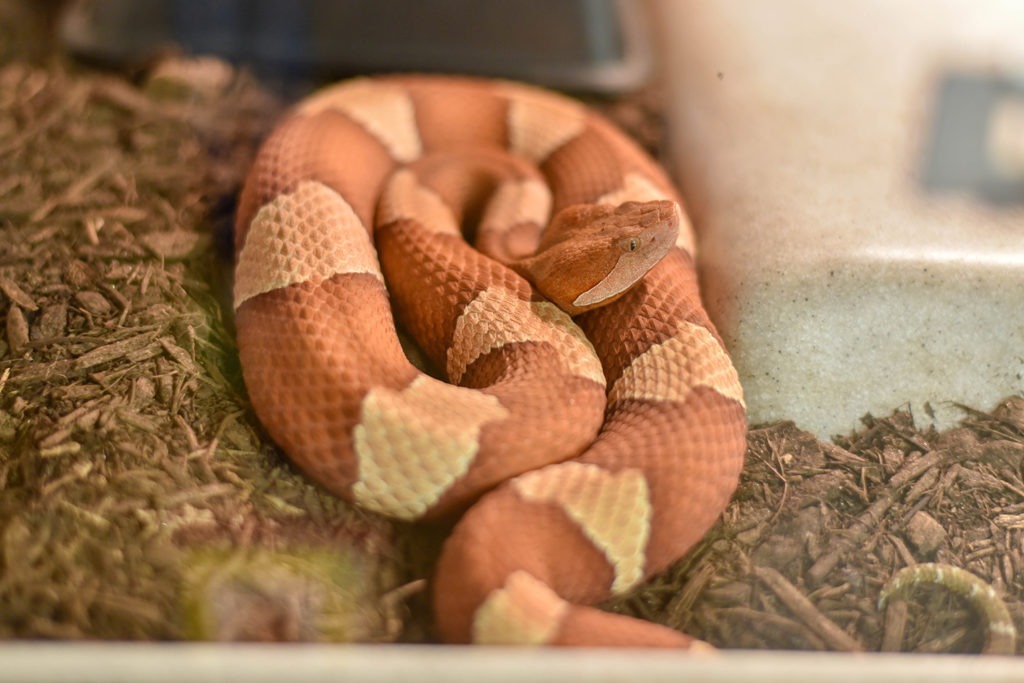
Banjo’s Cave habitat in the Maryland Wilderness has several ledges that are ideal for basking, and guests may find him resting there. If not, Banjo may be partially tucked into moss on the ground floor, or partially sheltered behind or under logs.
Special Care
Although copperheads are not generally aggressive animals, they do have a venomous bite that requires medical attention if a person is bitten. The zookeepers at the Maryland Zoo use specialized tools to care for both copperheads and timber rattlesnakes that allow them to gently move the snake and items in his habitat around from a safe distance. Guests may see these tools coming from the top of the habitat space as they move through the Cave. All zookeepers who care for the copperhead undergo rigorous training to ensure safe and considerate practices for both themselves and the snakes.
Conservation Status
Least Concern
This status means that the population of Eastern copperheads living in their native habitat is doing well, but there are always opportunities to ensure this species can continue thriving.
How you can help
Eastern copperheads play an important role in the ecosystems they are native to. They keep populations of small animals under control, which keeps local food webs stable. Respect their role in the ecosystem and keep them safe– they are a very shy species that would much rather never be involved with humans or other large animals! If a copperhead must be moved, reach out to a professional who can safely relocate them to another healthy habitat.
All animals thrive when their habitats are in excellent condition. When you respect and care for local habitats, you’re helping these animals thrive. Keep habitats clean of trash and chemicals, stick to designated nature paths, and encourage the growth of native plants on land in your care.
How the Zoo is helping
Many of the animals in the Maryland Zoo’s care that are native to Maryland are specifically native to Druid Hill Park, the park where the Zoo is located. While copperheads are not confirmed to be in Druid Hill Park, there have been sightings of them in other parks in Baltimore county.
The Maryland Zoo takes great care to ensure that zoo grounds benefit the wellbeing of all native animals found living within it. The Zoo prioritizes native plants, designs construction with wildlife safety in mind, and routinely surveys the grounds to check on the status of local populations.
Taxonomy
- Kingdom: Animalia
- Phylum: Chordata
- Subphylum: Vertebrata
- Class: Reptilia
- Order: Squamata
- Family: Viperidae
- Genus: Agkistrodon
- Species: A. contortrix