

Overview
Get to Know the Ruddy Ducks!
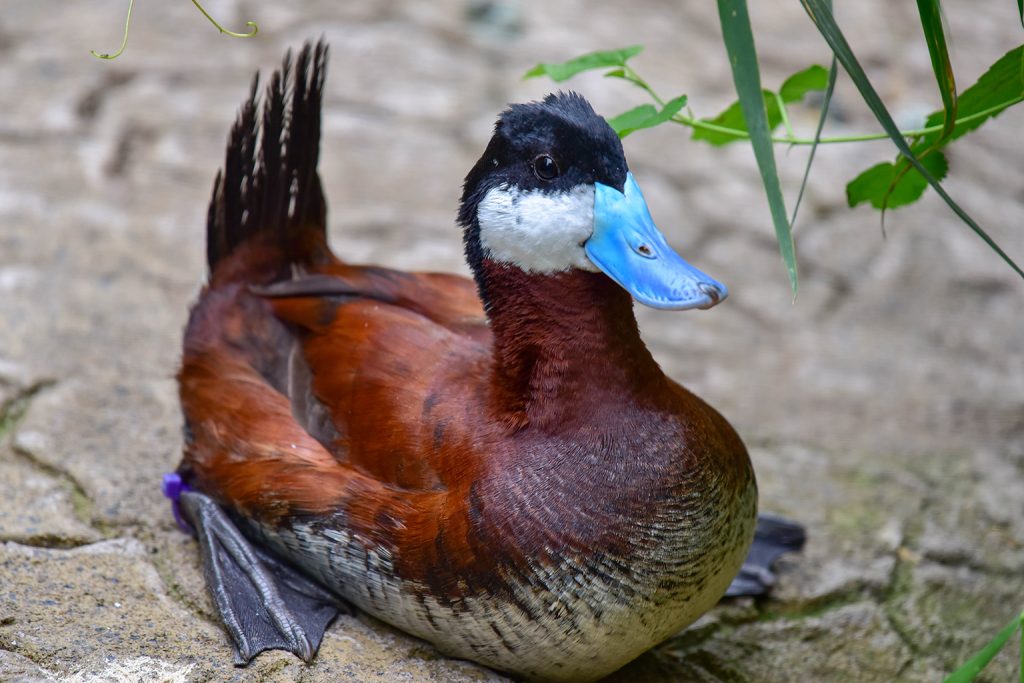
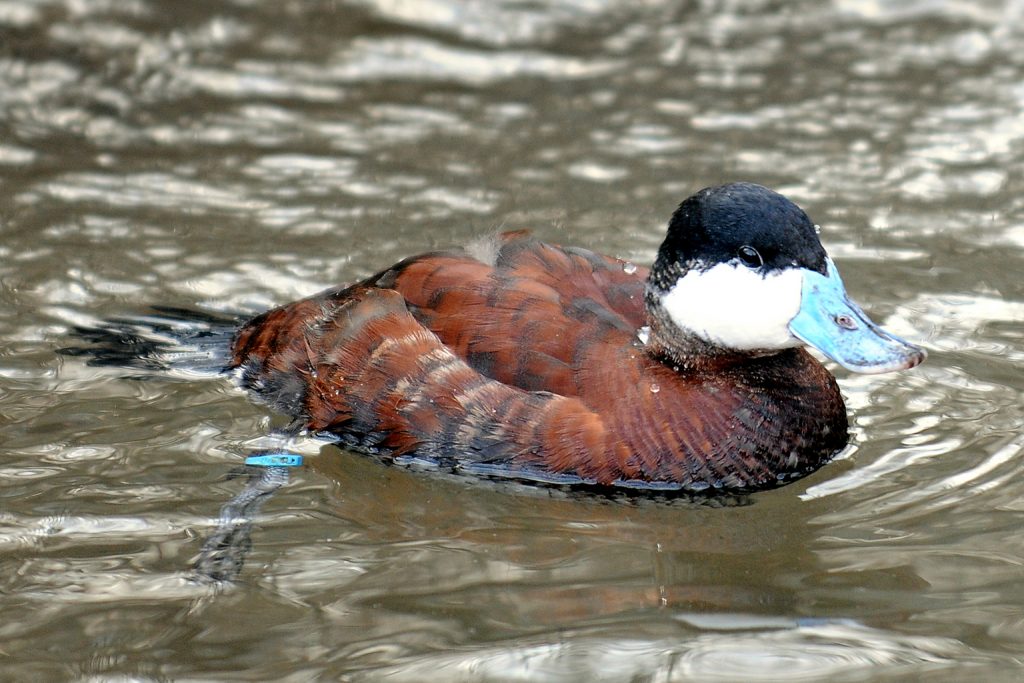
Ruddy ducks are one of the smallest (and roundest) ducks found in Maryland, and are named for their “ruddy,” or reddish-brown, color. They have a very unique swimming posture with feet paddling along their sides. If guests are visiting in the breeding season of May to July, they can easily spot a male ruddy duck by his distinct blue bill and white cheeks, while the females have a dark bill and mostly brown plumage year-round. Outside of May and July, the males will develop the same brown plumage as the females, but keep a subtle white cheek.
Who’s Who
Individual ducks in the Marsh Aviary can be specifically identified by the colored bands on their legs. Like most birds in the Maryland Zoo, bands on the left leg indicate the bird is a female, while bands on the right leg indicate the bird is a male.
Where to Find Us
The ruddy ducks in the Marsh Aviary spend the majority of the day in the water and aren’t picky about where in the stream they’ll choose to spend their time. Ruddy ducks are often found in tight flocks and the group at the zoo is no exception– while they may sometimes split into smaller groups, guests will likely see all of the ruddy ducks together at once. Although they are exceptional swimmers, readily diving into the water for food, their movement on land is charmingly awkward and very bouncy.
During breeding season guests may have a tough time spotting all of the females in the aviary– they will tuck into very well-hidden areas between rocks and under the boardwalk to make and protect their nests, and they will not hesitate to defend them.
Special Care
Ruddy ducks have one of the most unique calls among North American ducks, and birders often list their courtship displays as their favorite among ducks. A male ruddy duck will drum his bill against his chest, creating a clicking noise and producing bubbles on the water surface, then end the drum with a small croak. This display is very common in late spring, and may be mistaken for a frog call to people passing by!
Conservation Status
Least Concern
This status means that the population of ruddy ducks living in their native habitat is doing well, but there are always opportunities to ensure the continued wellbeing of this species.
How you can help
All waterfowl need a safe, clean habitat where they can feed and nest. You can help local Maryland species of ducks, geese, and swans by keeping trash out of wetland habitats and waterways.
You can also support the wellbeing of waterfowl by refraining from giving them human food. Although feeding local wildlife can feel helpful, it can actually harm them. They may become more bold and aggressive. In addition, bread and other human foods are not healthy items for waterfowl.
How the Zoo is helping
The Maryland Zoo is one of many zoos that house animals that have been rehabilitated but can no longer survive without professional care. A bird may be unreleasable due to severe injuries that prohibit movement, a lack of fear of humans, or damage to their senses that makes it hard for them to find food or avoid predators.
Taxonomy
- Kingdom: Animalia
- Phylum: Chordata
- Subphylum: Vertebrata
- Class: Aves
- Order: Anseriformes
- Family: Anatidae
- Genus: Oxyura
- Species: O. jamaicensis