

Overview
“Where I live”
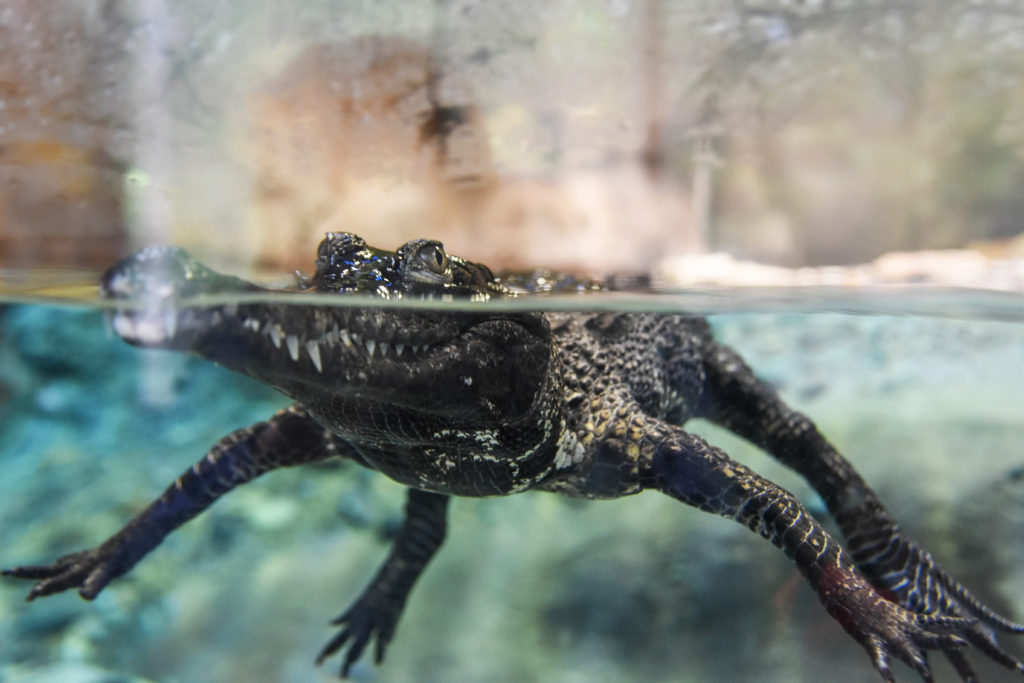
Slender-snouted crocodiles are found in Central and West Africa, from Mauritania and Senegal to North Angola east to Zaire, Zambia, and East Tanzania. They live mainly in rivers and lakes and prefer freshwater over saltwater. The Maryland Zoo is one of few North American zoos to hold this species. See them in the African Journey, next to the Panamanian Golden Frog exhibit.
“How I live there”
Slender-snouted crocodiles eat mainly fish and crustaceans. They hunt by swimming parallel to the shoreline and curving their tails to trap fish in shallow water. Larger members of the species may prey opportunistically on the occasional bird or small mammal, but no slender-snouted crocodile is big or powerful enough to take down Africa’s larger prey species such as zebra and wildebeest.
“Making my mark”
Slender-snouted crocodiles are said to have a call that sounds like a truck backfiring. They are known scientifically as Crocodylus cataphractus. Crocodylus comes from the Greek krokodeilos, which means “pebble worm.” Cataphractus comes from the Greek kataphraktos, which means “clad in armor.”
“What eats me”
Soft-shelled turtles may prey upon young slender-snouted crocodiles, but losses to such predation seem to be minimal. Humans also hunt these crocodiles aggressively for meat and hides.
Raising Young
Breeding season for slender-snouted crocodiles generally corresponds with the rainy season, from about March through July. Females build mound nests along riverbanks and lay 13 to 27 eggs on average. Each female will stay near her nest while the eggs incubate, but this species of crocodile is less aggressive in defending its nest than are most other species. When the female hears the chirping sounds made by her babies as they are hatching, she will break open the nest and assist in the hatching process. The baby crocodiles disperse immediately after an approximately 110-day incubation period.
Conservation
Nobody knows precisely how many slender-snouted crocodiles there are in the world, or the status of their population. Their numbers are probably declining in response to habitat pressure and over-hunting for meat and hides.
Taxonomy
- Kingdom: Animalia
- Phylum: Chordata
- Subphylum: Vertebrata
- Class: Reptilia
- Order: Crocodylia
- Family: Crocodylidae
- Genus: Mecistops
- Species: M. cataphractus