
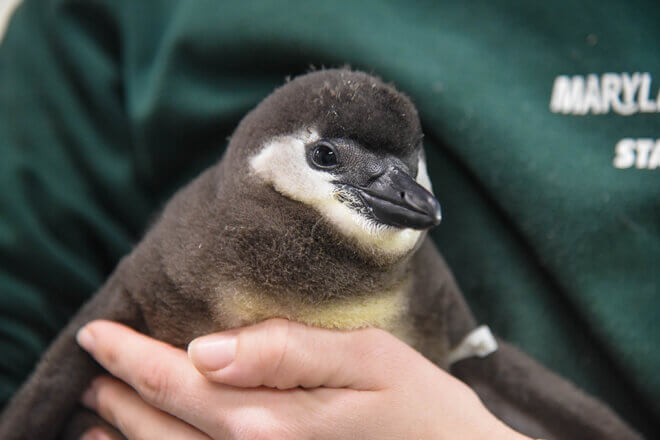
BALTIMORE, MD – The largest population of African penguins (Spheniscus demersus) in North America is getting bigger. Maryland Zoo has hatched eight critically-endangered African penguins (Spheniscus demersus) this breeding season and, in an annual tradition, penguin zookeepers have chosen a theme for the chicks’ names.
This year the birds are being named after fruits and vegetables, and the first two names announced by the Zoo today are: Kiwi and Cayenne. More names will be unveiled in the coming weeks.
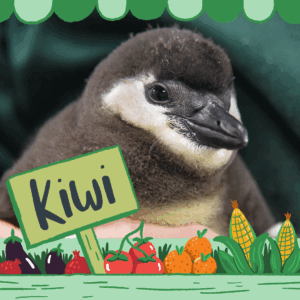
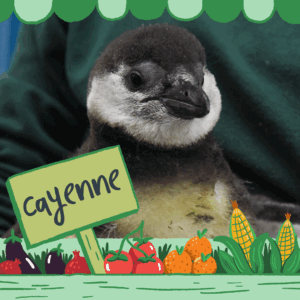
In an annual tradition, penguin zookeepers have chosen a theme for the chicks’ names. This year the birds are being named after fruits and vegetables, and the first two names announced by the Zoo are Kiwi and Cayenne.
Breeding season at the Zoo begins in mid-September and lasts until the end of February, mimicking the spring-to-summer breeding season for these birds in their native South Africa and Namibia.
“The number of African penguins in the wild is dropping,” said Maryland Zoo Bird Curator, Jen Kottyan, who is also the Program Leader for the African Penguin Species Survival Plan© (SSP), overseeing African penguin breeding programs at zoos accredited by the Association of Zoos and Aquariums (AZA).
“If we can fix the issues these birds face in the wild, such as overfishing and habitat loss, one day penguins from our highly managed SSP could be sent to their native South Africa and Namibia to repopulate the wild colonies, which means every chick hatched here is important to this species’ global survival,” Kottyan added.
Despite being a protected species, the number of wild African penguins has declined dramatically. The International Union for Conservation of Nature re-classified this species as critically-endangered. There is a real chance the birds will become extinct in the wild within ten years.
Maryland Zoo has the largest collection of African penguins in North America. More than 1,000 chicks have hatched here over the past 50 years. While most remain in Baltimore, these animals have helped establish new colonies at zoos and aquariums in 35 states and Canada.
We are dedicated to securing a future for these animals. If you’d like to support us in helping the penguins, please donate!
Click image for full size slideshow

Share this article