

Overview
Get to Know the Northern Shoveler!
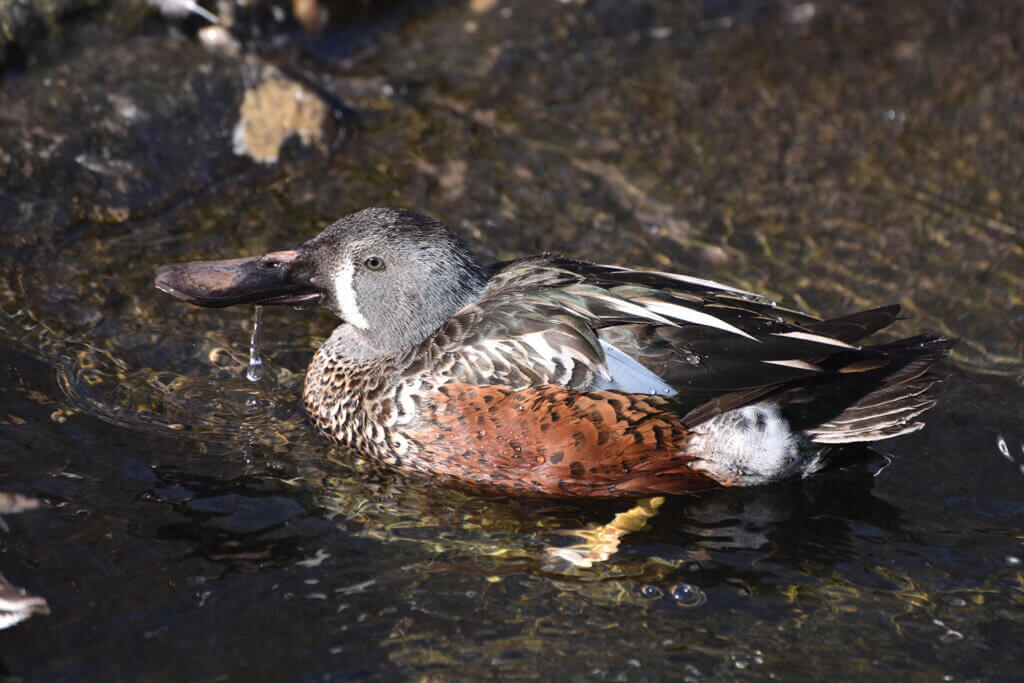
Northern shovelers are very easy to identify thanks to their uniquely large and spoon-shaped bill. Like most ducks found in Maryland, they have a different plumage (feather colors) depending on if they are currently in their breeding season. Male northern shovelers will typically have a striking green head and white breast during their breeding season of April to June. However, the male Northern shoveler in the aviary commonly does not gain breeding plumage, remaining year-round in their non-breeding (or “eclipse”) plumage of a dark head and a mottled brown body.
Where to Find Me
The Northern shoveler is commonly found in the water closest to the beaver dam and otter exhibit. If not there, he is likely resting on the bank of the water in the center of the aviary or investigating new food dropped off by a zookeeper. He is one of the fastest ducks in the aviary when it comes to pursuing crickets tossed by keepers, and his size and speed often make it easy for him to be first in line.
Special Care
The Northern shoveler’s large, wide bill is perfect for dabbling in the water to efficiently feed on aquatic invertebrates and seeds. Thanks to fine bristles on the edges of dabbling duck bills known as lamellae, these ducks can pick up a scoop of wetland water in their mouths, filter out all of the water and mud through the lamellae, and feast on what’s left.
Conservation Status
Least Concern
This status means that the population of northern shovelers living in their native habitat is doing well, but there are always opportunities to ensure the continued wellbeing of this species.
How you can help
All waterfowl need a safe, clean habitat where they can feed and nest. You can help local Maryland species of ducks, geese, and swans by keeping trash out of wetland habitats and waterways.
You can also support the wellbeing of waterfowl by refraining from giving them human food. Although feeding local wildlife can feel helpful, it can actually harm them. They may become more bold and aggressive. In addition, bread and other human foods are not healthy items for waterfowl.
How the Zoo is helping
The Maryland Zoo is one of many zoos that house animals that have been rehabilitated but can no longer survive without professional care. A bird may be unreleasable due to severe injuries that prohibit movement, a lack of fear of humans, or damage to their senses that makes it hard for them to find food or avoid predators.
Taxonomy
- Kingdom: Animalia
- Phylum: Chordata
- Subphylum: Vertebrata
- Class: Aves
- Order: Anseriformes
- Family: Anatidae
- Genus: Spatula
- Species: S. clypeata