

Overview
Get to Know the Black-Crowned Night Herons!
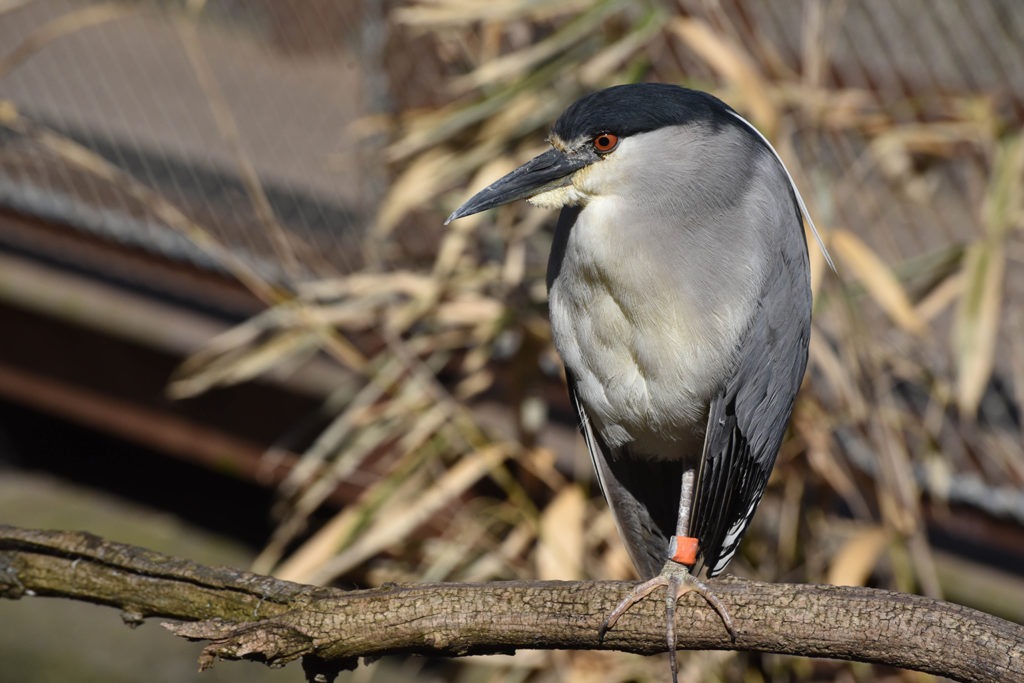
Black-crowned night herons are well-named by the distinct black feathers on the top of their heads and back with an otherwise light gray body. They are a small and stout species of heron that spends most of the day perched in peace, saving energy for nightfall when they are most active. While they may not look like they have the iconic long heron neck when resting, they certainly do, it’s just well-tucked between their head and chest.
Who’s Who
The black-crowned night herons in the aviary can be tricky to tell apart when guests spot them. Their appearance can change significantly depending on if they’ve just eaten fish or waded through the water. The way zookeepers confidently tell them apart is by the color on the band on their left leg.
Where to Find Us
If a guest has spotted one black-crowned night heron in a tree, they should look closer– it’s likely several other herons have picked that same tree for the day. This grouping behavior is called communal roosting, and helps black-crowned night herons stay warm, stay safe from predators, and stay informed between each other about successful feeding sites. There is no specific tree that the black-crowned night herons prefer year-round, so over the year they choose different ones to spend their time in when they’re not along the banks of the water. In the spring, guests may even see a few nests! All of the nests in the marsh aviary found high in the trees are black-crowned night heron nests, and they may have several uniquely blue eggs inside of them.
Special Care
At feeding time, the black-crowned night herons are fed along the edge of the water in the center of the aviary. Feeding time is typically at the end of the day, as black-crowned night herons are most often hunting along the water starting at dusk then through the night. Guests may see them eat directly from the offered food, or they may see them washing their food in the water. Black-crowned night herons are also known to dangle small food items just above the water’s surface, waiting for curious fish and then striking for a larger meal!
Conservation Status
Least Concern
This status means that the population of black-crowned night herons living in their native habitat is doing well, but there are always opportunities to ensure the continued wellbeing of this species.
How you can help
All wading birds like black-crowned night herons need a safe, clean habitat where they can feed and nest. You can help local Maryland species of herons, ducks, geese, and swans by keeping trash out of wetland habitats and waterways.
You can also support the wellbeing of wading birds by refraining from giving them human food. Although feeding local wildlife can feel helpful, it can actually harm them. They may become more bold and aggressive. In addition, human foods are not healthy items for wading birds.
How the Zoo is helping
The Maryland Zoo is one of many zoos that house animals that have been rehabilitated but can no longer survive without professional care. A bird may be unreleasable due to severe injuries that prohibit movement, a lack of fear of humans, or damage to their senses that makes it hard for them to find food or avoid predators.
Taxonomy
- Kingdom: Animalia
- Phylum: Chordata
- Subphylum: Vertebrata
- Class: Aves
- Order: Pelecaniformes
- Family: Ardeidae
- Genus: Nycticorax
- Species: N. nycticorax