
Overview
Get to Know the American Toads!
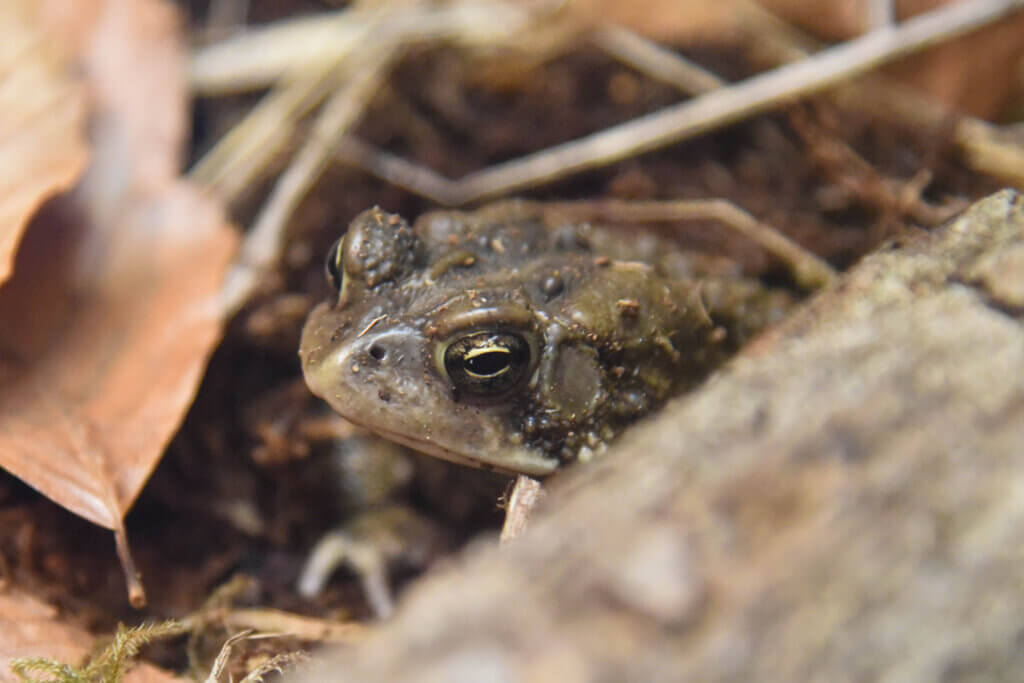
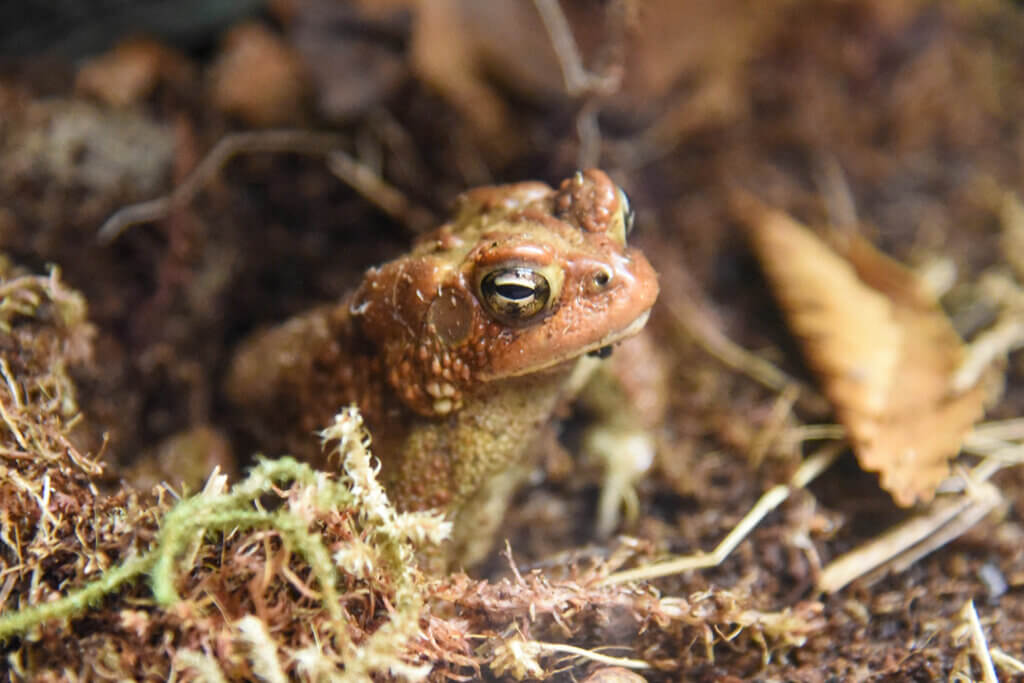
In the Meadow at the edge of the Maryland Wilderness, guests will find a habitat housing several American toads. Each toad is patterned with unique warts along their body– which, by the way, will NOT give you warts if you touch them! A toad’s coloration may change slightly over the years, but the wart locations typically remain the same.
Who’s Who
Because an American toad’s warts typically stay in the same place, zookeepers will use these wart locations as patterns to tell apart one toad from another. It’s best to think of their wart patterns as a personalized toad constellation!
Where to Find Us
With mottled, earthy-colored and bumpy skin, American toads are masters at hiding in plain sight. They may be tough to see if you walk by the zoo habitat quickly, but outside of the winter they are often perched on and along the rock walls of the habitat and resting in the water bowl. Guests may even see toads peeking out through the moss placed in the rockwork.
Special Care
Zookeepers feed the toads at random times during the day. To begin the feeding they will move all of the toads together in a circle and drop food in the center in a practice the keepers refer to as “toad meeting time.”
Toads rely on the movement of their prey to locate and catch them on their tongues. Here at the Zoo, the toads feed on a variety of both fast and slow-moving insects to make use of this natural behavior. Typically once insects have been added to the feeding circle, toads will quickly lean in and freeze facing the insects, getting as close as possible to the moving target before striking. You may even see a toad’s toe twitching at feeding time– this wiggling digit acts as a lure to bring insects closer to the toad’s mouth!
Conservation Status
Least Concern
This status means that the population of American toads living in their native habitat is doing well, but there are always opportunities to ensure this species can continue thriving.
How you can help
All animals thrive when their habitats are in excellent condition. When you respect and care for local habitats, you’re helping these animals thrive. Keep habitats clean of trash and chemicals, stick to designated nature paths, and encourage the growth of native plants on land in your care.
How the Zoo is helping
Many of the animals in the Maryland Zoo’s care that are native to Maryland are specifically native to Druid Hill Park, the park where the Zoo is located. The Maryland Zoo takes great care to ensure that zoo grounds benefit the wellbeing of all native animals found living within it. The Zoo prioritizes native plants, designs construction with wildlife safety in mind, and routinely surveys the grounds to check on the status of local populations.
Taxonomy
- Kingdom: Animalia
- Phylum: Chordata
- Subphylum: Vertebrata
- Class: Amphibia
- Order: Anura
- Family: Bufonidae
- Genus: Anaxyrus
- Species: A. americanus