



Overview
Get to Know Campbell!
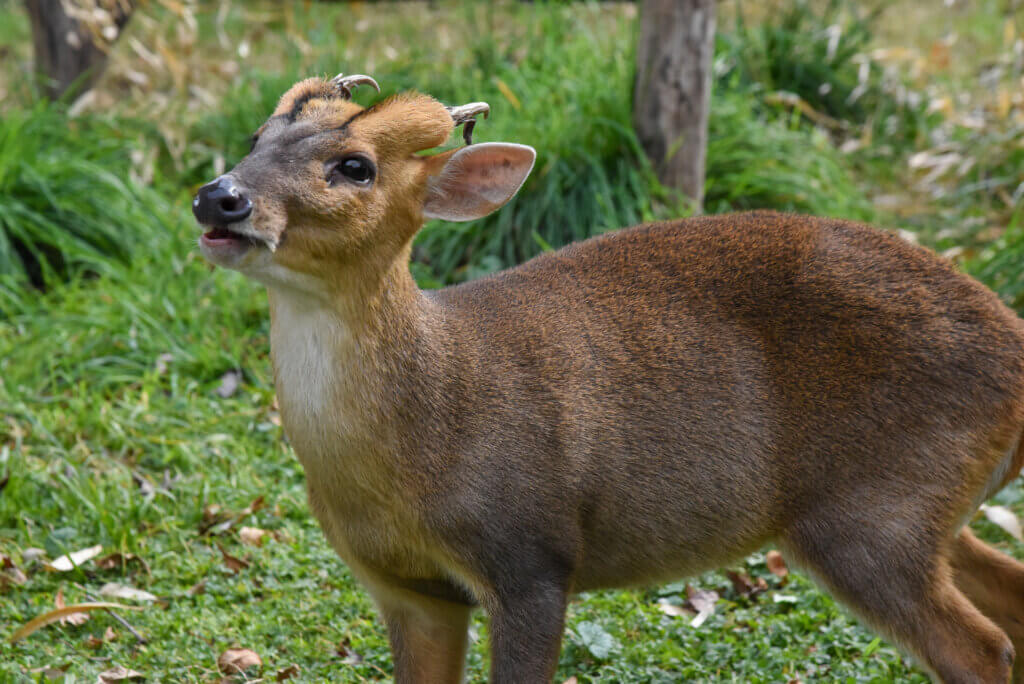
At full adult size, Campbell joins us from the Rosamond Gifford Zoo, where he grew up in a shared habitat of muntjacs and red pandas. Although adult muntjacs live among many other species in their native forests, they are most often solitary, which means they prefer not to live with other muntjacs. the territories of some muntjacs, however, can overlap. Male muntjacs defend their territories from other males using their antlers and tusk-like teeth.
Where to Find Me
Campbell is found in the outdoor yards of the Crane Barn, usually sharing space with the peacock. When he is not choosing to rest in the shed in his yard, he typically lounges underneath the peafowl perches or shrubs. It’s a natural behavior for muntjacs to spend time under cover to avoid being spotted by predators, and with his small size you may need a sharp eye to find him when he is tucked away in the leaves. When he is not resting, he often scratches against branches or bark, nibbling at any bark pieces that fall off. He is always excited to see the Zoo staff who care for him, and will almost never turn down a unique food item.
Special Care
Male Reeves’ muntjacs, like most male deer, shed their antlers annually. Expect Campbell’s antlers to shed in the late spring and regrow in late autumn. As deer antlers grow, they are covered with a velvet skin that will rub off over a few days when the antlers are done developing.
Curious about the “holes” below Campbell’s eyes? These are called his preorbital glands! Muntjacs use these glands to produce chemicals they can use to advertise their territory. These chemicals can trace a muntjac’s age, sex, and family group.
Conservation Status
Least Concern. This status means that the population of muntjacs living in their native range is doing well. However, the population of Reeves’ muntjacs in their native range is declining. The largest threats to this species are overhunting and habitat loss. To help this species population stay healthy, consider buying wood-based products like paper from sources that can confirm their trees have been sustainably harvested.
Taxonomy
- Kingdom: Animalia
- Phylum: Chordata
- Subphylum: Vertebrata
- Class: Mammalia
- Order: Artiodactyla
- Family: Cervidae
- Genus: Muntiacus
- Species: M. reevesi